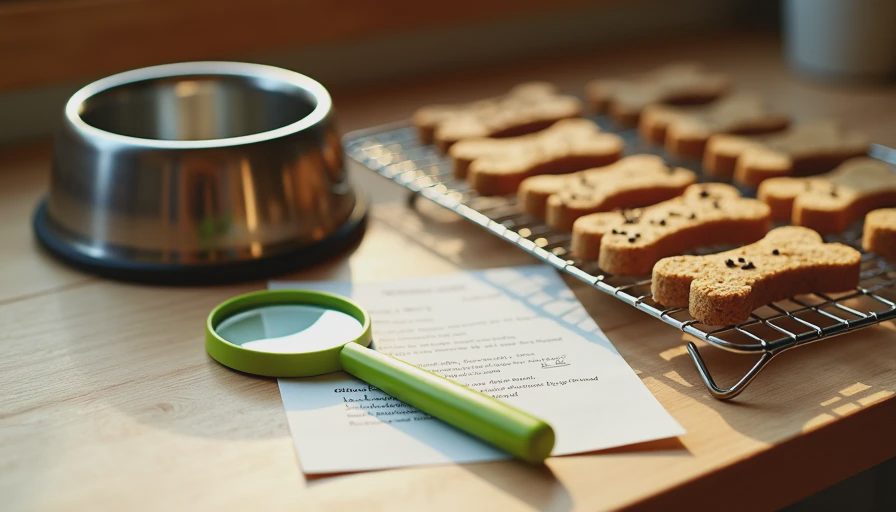
The Official Taste Panel
My children, Noah (12) and Sophie (8), decided last winter that the dogs needed better treats. Not store-bought, not the ones I quietly approve for training, but “real” treats made in our kitchen. They formed a committee of two, appointed Roux and Clover as the official taste panel, and declared that I was allowed to observe but not to take over.
I agreed, with one condition: final nutritional veto power. That is how our household now has a homemade treat recipe that is both kid-approved and nutritionist-tolerated.
This post is the recipe, the vetoes I exercised, and the practical reasons behind them. It is not a medical recommendation. It is simply what happens when you let children invent dog treats under the supervision of someone who reads nutrient profiles for a living.
The Kids’ Original Vision
Noah and Sophie’s first draft was enthusiastic. It included peanut butter, banana, oats, a handful of shredded cheese, a drizzle of honey, and—briefly—a proposal for chocolate chips that I vetoed before the sentence was finished. They wanted something soft enough to tear into training-sized pieces and appealing enough that both dogs would work for it.
The core idea was sound: a simple baked treat using ingredients already in most kitchens. My job was to keep the finished product from becoming a calorie bomb or a source of unnecessary nutritional imbalance.
The Veto List (And Why Each One Mattered)
Chocolate was an immediate no. Theobromine toxicity is not theoretical.
Honey was reduced to a very small amount. Dogs do not need added sugar, and the calorie density adds up quickly when treats are used throughout the day.
Cheese was limited. A little improves palatability; a lot adds fat and sodium that most dogs do not require in a training treat.
Peanut butter stayed, but only the plain, unsalted, xylitol-free variety. Xylitol is dangerous; many “natural” peanut butters still contain it. We measure it rather than scooping freely.
Banana stayed in moderation. It contributes potassium and moisture but also sugar and calories.
The final version is deliberately plain. The dogs do not seem to mind.
The Recipe We Actually Use
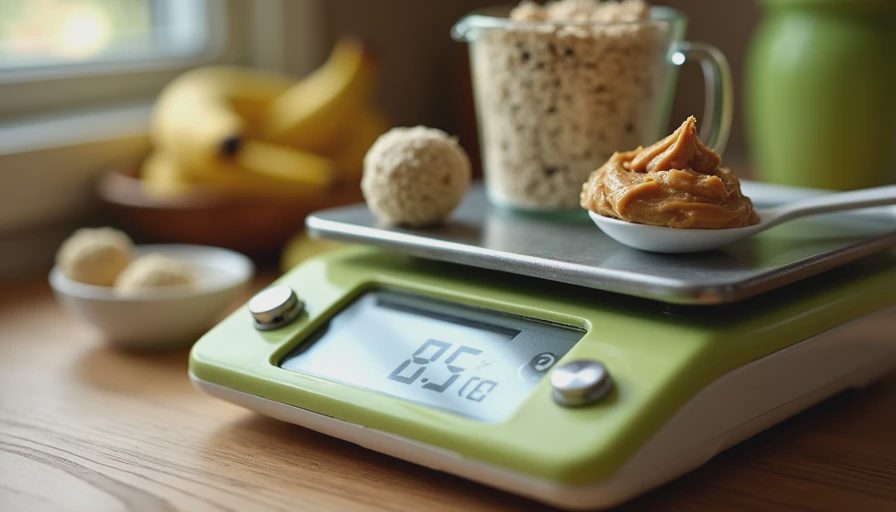
This makes a batch of soft, tearable treats that we portion and freeze.
Ingredients (approximate weights for consistency):
120 g plain cooked sweet potato or banana (mashed)
60 g unsalted, xylitol-free peanut butter
100 g oat flour (or finely ground rolled oats)
1 large egg
Optional: 10–15 g finely grated carrot for a little extra fiber and color
Instructions:
Preheat oven to 325 °F (165 °C). Line a baking sheet with parchment.
Mash the sweet potato or banana until smooth. Mix in the peanut butter and egg until uniform.
Add the oat flour and optional carrot. Stir until a soft dough forms. If it is too sticky, add a tablespoon more oat flour.
Roll or press the dough to about ¼-inch (6 mm) thickness. Cut into small squares or use a simple cutter.
Bake 18–22 minutes until the edges are dry and the centers are set but still slightly soft.
Cool completely. Store in an airtight container in the refrigerator for up to a week or freeze for longer storage.
The texture stays soft enough to break into tiny pieces for training. Both dogs work for them.
The Nutritionist Notes I Added
I calculated a rough calorie estimate so we could keep treats inside a reasonable daily budget. Each small square is modest enough that a handful does not erase a weight-management plan.
I kept the ingredient list short. The more components you add, the harder it becomes to know what is driving any digestive reaction.
I avoided raisins, grapes, onion, garlic, macadamia nuts, and any sugar alcohols. Those vetoes are non-negotiable.
I made sure the peanut butter was measured. “A spoonful” in kid hands is a moving target; grams are not.
How the Taste Panel Responded
Roux, the senior Lab, is a traditionalist. He accepted the new treats immediately and still prefers them slightly warm from the oven. Clover, the three-legged cattle-dog mix, is more skeptical of change but will perform basic cues for them without hesitation. The children consider this a successful product launch.
I consider it successful because the treats are used in controlled amounts, the ingredients are known, and the calorie contribution is accounted for in the dogs’ daily totals. That is the entire standard.
Why I Let Them Do It
Homemade treats are not nutritionally necessary. Commercial training treats can be perfectly adequate. The value in this project was different: the children learned that “natural” still requires boundaries, that measurement matters, and that the dogs’ long-term health is part of the definition of a good treat.
They also learned that their father will negotiate on banana and carrot but will not negotiate on xylitol or chocolate. That seems like useful information for everyone involved.
Practical Takeaway for Other Kitchens
If you want to make dog treats with children, keep the recipe short, measure the calorie-dense ingredients, and maintain a hard list of toxic foods that never enter the mixing bowl. Use the treats as part of the daily calorie budget rather than as unlimited extras. Freeze the majority of the batch so they stay fresh and portion-controlled.
The dogs will not judge the culinary complexity. They will judge whether you have a treat in your hand. Everything beyond that is for the humans.
Our kitchen still produces occasional experimental batches. The veto power remains in effect. Roux and Clover continue to serve as the final quality-control step, and so far the system is working.
Flip the recipe card if you need to. Then weigh the peanut butter. The dogs will handle the rest of the product testing.
No notes yet — write the first one.