The trailhead is quiet, the air is cool, and your older dog is watching you with the same expression he had at age three: ready to go. Hiking with senior dog can be deeply rewarding, but the goal is not to prove that an aging Labrador, terrier, or mixed breed can cover the same miles as before. The goal is a comfortable outing that leaves your dog interested in tomorrow's adventure, not limping through the evening.
Start with a health and trail check
Before hiking with senior dog, schedule a veterinary exam if your dog has not had one recently. Senior dogs commonly develop arthritis, dental disease, heart changes, reduced vision, or kidney problems, and some of these conditions are subtle at home. Your veterinarian can assess gait, joints, heart and lungs, body condition, and current medications. Ask specifically whether the planned activity fits your dog's health rather than asking only whether the dog is “old enough.”
A good first route is short, shaded, and close to the car. Choose a packed dirt path with modest elevation instead of a rocky trail with long stairs. A 20- to 30-minute loop is a reasonable trial for many older dogs, but the correct distance depends on prior conditioning, body weight, joint comfort, and weather. Walk it yourself first when possible. A trail that looks easy on a map can include loose gravel, slippery bridges, or a steep return climb.
Watch your dog before, during, and after the walk. Stiffness that improves after a few minutes can still indicate osteoarthritis. Reluctance to climb, repeated sitting, lagging behind, excessive panting, or a changed gait means the outing needs a break or an early exit. A dog who seems fine on the trail but is sore that night went farther than his current conditioning allowed.

Build distance slowly and manage the pace
Hiking with senior dog works best when you think like a trainer, not a tourist collecting mileage. Begin with several easy walks each week and increase either time or terrain gradually, not both at once. If your dog comfortably handles 25 minutes on level ground, add five minutes on a later outing before introducing a hill. This gives muscles, tendons, paws, and joints time to adapt.
Let your dog set much of the speed. A steady, relaxed walk is more useful than a brisk pace followed by a long recovery. Stop at natural landmarks for water and observation. On downhill sections, slow down; descending can place substantial stress on arthritic hips, knees, shoulders, and toes. A short leash provides control without forcing your dog to pull. Retractable leashes are often awkward around other hikers, wildlife, and uneven footing.
Paw protection deserves practical attention. Check pads after the walk for cuts, heat damage, embedded stones, or worn areas. Booties can help on abrasive or hot surfaces, but introduce them at home well before the hike. Some dogs need several short sessions to walk normally in boots. Do not apply a new balm or topical product for the first time before a long outing, since licking or skin irritation can turn a pleasant day into a veterinary problem.
Food, water, and treats on the trail
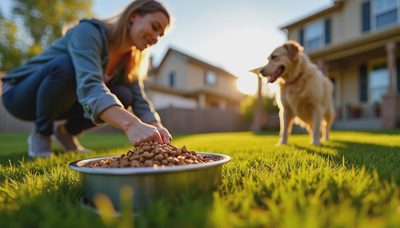
Nutrition for hiking with senior dog does not require a special “energy” food for every outing. For a short hike, your dog's regular complete and balanced diet is usually appropriate. A longer or more strenuous trip increases energy and hydration needs, but adding large amounts of fat or rich treats suddenly can cause gastrointestinal upset. Keep the pre-hike meal familiar and moderate rather than feeding a heavy portion immediately before climbing.
Carry enough water for both of you, especially in warm or dry conditions. Offer small amounts during breaks instead of waiting until your dog is frantic with thirst. A collapsible bowl makes pacing easier and discourages drinking from stagnant ponds or puddles, which can contain harmful organisms or chemical contaminants. Pack a few familiar treats, but count them as part of the day's intake. Treats are useful for rewarding calm behavior, checking in, or encouraging a safe turn toward the trailhead; they should not become the main source of calories.
Here's what the panel says—and what it doesn't: a treat labeled “natural,” “grain-free,” or “high protein” does not automatically make it better trail fuel. Read the ingredient list and feeding guidance, but remember that the label cannot predict how your individual dog will tolerate a new snack. Use the same food your dog already handles well whenever possible.

Heat, cold, and medication planning
Temperature changes matter more to older dogs than many owners expect. Dogs with gray muzzles, short noses, heavy coats, excess weight, or heart and lung disease can struggle in warm weather. Choose early morning, seek shade, and avoid hot pavement. Panting that becomes frantic, weakness, vomiting, confusion, or collapse is an emergency. Move the dog to shade, cool the body with room-temperature water and airflow, and seek urgent veterinary care; do not force water into an unconscious or collapsing dog.
Cold weather has its own risks. Stiff joints may feel worse after standing still, and snow or ice can hide sharp debris. A coat can help a thin or cold-sensitive dog, but it does not replace a shorter route and frequent checks. If your dog takes a prescribed medication, bring it in its original container and follow the veterinary schedule. Never give human pain relievers such as ibuprofen or naproxen unless a veterinarian specifically directs you; they can be dangerous for dogs.
A simple plan for the outing
Before hiking with senior dog, tell someone where you are going and when you expect to return. Bring water, a bowl, regular food or familiar treats, waste bags, a basic first-aid kit, a leash, identification, and a charged phone. A towel or lightweight blanket can help you carry or cushion a tired dog, although a large dog may require a more realistic emergency transport plan.
During hiking with senior dog, pause before your dog asks. Check breathing, gait, gums, paw pads, and attitude. An older dog who is alert, walking evenly, and willing to continue is giving you useful information. So is a dog who stops responding to cues, lies down repeatedly, or looks uncomfortable. Turn around while the dog still has reserve. The most successful hike may end 15 minutes earlier than planned.
After hiking with senior dog, provide a calm cool-down rather than immediate rough play. Offer water, inspect paws, and notice how the dog rises, lies down, and walks later that day and the next morning. Delayed soreness is important feedback. If recovery takes more than a day, discuss the pattern with your veterinarian before increasing distance.
Make the next hike easier, not harder
Hiking with senior dog is a moving conversation between you and the dog. You bring planning, observation, and sensible nutrition; your dog supplies the pace and the feedback. There is no prize for reaching the overlook if the return trip becomes painful. Shorter routes, good footing, shade, familiar food, and early turnarounds can preserve both safety and enthusiasm.
Today, flip the bag of your dog's regular food and treats, confirm that the diet is complete and balanced for the appropriate life stage, and pack only familiar options for your next outing. Then choose a trail your dog can finish comfortably, with enough time and water to make the walk feel easy.



No notes yet — write the first one.