The Dog Who Arrived Overweight and Optimistic
The Beagle’s name was Murphy. He was five years old, weighed 40 pounds, and had the cheerful, food-motivated personality that makes Beagles both delightful and metabolically challenging. His owner, a software engineer who worked from home, brought him in because the dog was tiring on walks, panting heavily after short play sessions, and had started to refuse the longer hikes they used to enjoy.
Body-condition score was a solid 8 out of 9. Ribs were difficult to feel under a thick fat cover. There was a clear abdominal tuck deficit and a heavy fat deposit over the lumbar area. Murphy was otherwise healthy on exam and baseline bloodwork—no hypothyroidism, no other endocrine red flags. This was straightforward, garden-variety canine obesity driven by long-term positive energy balance.
The owner’s goal was simple: help Murphy lose weight so he could move comfortably again. My job was to design a plan that was precise enough to produce steady loss and realistic enough that a busy human would actually follow it for months.
Starting Numbers and the First Conversation
Ideal body weight for Murphy’s frame was estimated at 28 pounds. That meant we needed to lose roughly 12 pounds. I set an initial target rate of 1 percent of body weight per week—about 0.4 pounds per week at the starting weight. Faster loss increases the risk of muscle loss and rebound; slower loss often loses owner momentum.
We calculated current calorie intake by having the owner log everything for seven days: the main food, the training treats, the dental chews, the occasional stolen sandwich crust, and the “just a little bit of cheese” that happened more often than anyone wanted to admit. The log revealed a familiar pattern. The measured kibble was reasonable. The extras were not. Treats and table scraps were adding an estimated 25–30 percent extra calories most days.
This is the conversation I have with almost every weight-loss client: the main bag of food is rarely the only problem. The invisible calories are.
The Plan We Actually Used
We made four concurrent changes.
First, we switched Murphy to a veterinary therapeutic weight-loss diet. These diets are higher in protein and fiber relative to calories, which helps preserve lean mass and improves satiety. The owner had previously tried simply feeding less of the regular adult maintenance food; Murphy had acted constantly hungry and had scavenged more. The higher-fiber therapeutic food reduced that behavior within two weeks.
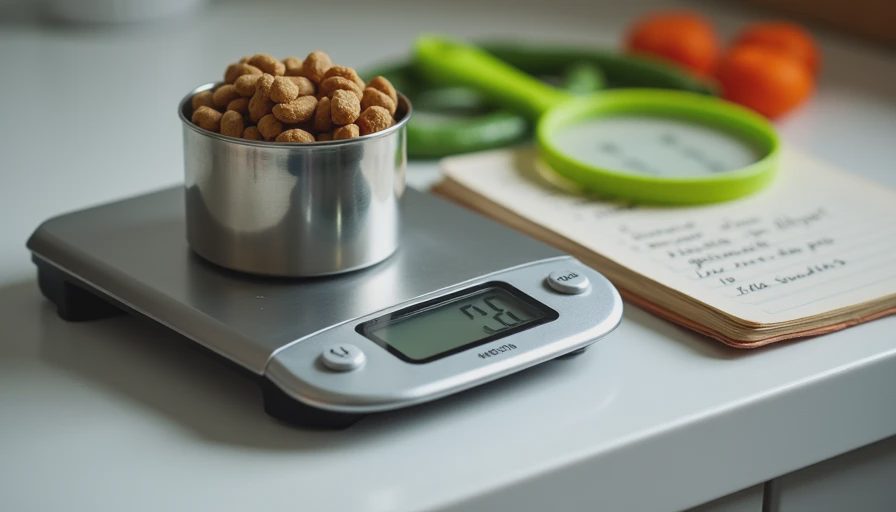
Second, we set a precise daily calorie target based on the calculated requirement for weight loss, not for current weight maintenance. The number was lower than the owner expected. We measured the food on a kitchen scale rather than a measuring cup. Volume measures are inaccurate enough to erase a planned deficit.
Third, we rebuilt the treat budget. All training treats, dental products, and “extras” had to fit inside 10 percent of the daily calorie total. We switched to low-calorie options (certain vegetables, measured amounts of the weight-loss kibble itself used as treats) and put the cheese and commercial soft treats away. The owner was allowed one small higher-value treat per day for important training moments, accounted for in the budget.
Fourth, we increased structured movement. Murphy already had some outdoor time, but it was low-intensity sniffing. We added two short daily walks with a goal of progressive duration and one slightly more active play session. The owner tracked steps on a simple pedometer attached to the collar for the first month so we had an objective baseline.
What the Weekly Check-Ins Looked Like
Murphy was weighed every 10–14 days on the same scale. We aimed for a loss of approximately 0.3 to 0.5 pounds per week. When the rate slowed, we adjusted the food amount downward by a small percentage rather than making large cuts. When the owner reported increased scavenging or restlessness, we looked first at treat drift and then at whether the fiber level was still adequate.
Muscle condition was monitored by palpation at each visit. It is easy to lose weight and also lose muscle if protein intake is too low or the calorie deficit is too aggressive. Murphy held his muscle well; the higher protein content of the therapeutic diet helped.
By the end of month three he had lost just over six pounds. Energy on walks was noticeably better. The owner reported that Murphy was sleeping less during the day and initiating play more often.
The Plateau and How We Handled It
At month five the scale stalled for three weeks. This is common. As weight declines, energy requirements decline with it. We recalculated the target for the new body weight, reduced the daily ration by another small increment, and tightened the treat log again. The owner had gradually become more generous with the “approved” vegetables; the volume was adding up. We reset the portion sizes and the loss resumed.
Plateaus are not failures. They are information that the current calorie level is now maintenance for the new weight. Adjust and continue.
Seven-Month Result
At the seven-month mark Murphy weighed 28.1 pounds. Body-condition score was 5 out of 9. Ribs were easily palpable with a slight fat cover. He completed a four-mile hike with the owner without excessive panting or lagging. The therapeutic weight-loss diet was transitioned to a calorie-appropriate adult maintenance food at the new ideal weight, with continued portion control and a permanent treat budget.
Total loss: 12 pounds. Rate: steady, sustainable, and achieved without the dog appearing miserable or the owner feeling deprived of all interaction around food.
Lessons That Transfer to Other Dogs
Measure the real starting intake, including everything that enters the dog’s mouth. Most plans fail because the baseline is wrong.
Use a scale, not a cup. The difference is large enough to matter.
Protect protein intake while creating a calorie deficit so that weight lost is primarily fat.
Treats must have a formal calorie budget or they will erase the deficit.
Expect plateaus and plan for small adjustments rather than dramatic overhauls.
Monitor muscle condition and energy, not only the number on the scale.
The end of the active weight-loss phase is the beginning of the weight-maintenance phase. The habits have to stay.
What This Case Does Not Prove
This is one dog. Beagles as a breed are predisposed to weight gain, and Murphy’s owner was highly compliant. Other dogs will have concurrent medical issues, different food preferences, multi-dog households that make portion control harder, or owners with less flexible schedules. The principles scale; the exact numbers and product choices must be individualized.
Weight management is still one of the highest-leverage health interventions we have in dogs. It is also one of the most frequently abandoned because the plan is either too vague or too punitive. Precision plus realism is the combination that worked here.
Closing Note
Murphy still gets treats. He still goes on hikes. He simply no longer carries twelve extra pounds while doing it. The bowl changed, the measuring became consistent, the extras were accounted for, and the movement increased. That was the entire intervention.
If your dog is carrying extra weight, the same framework applies: know the true intake, create a controlled deficit with adequate protein, budget every calorie that is not the main meal, move the body, and measure progress frequently enough to adjust before motivation fades.
The dog does not need a perfect owner. The dog needs a consistent one.



No notes yet — write the first one.