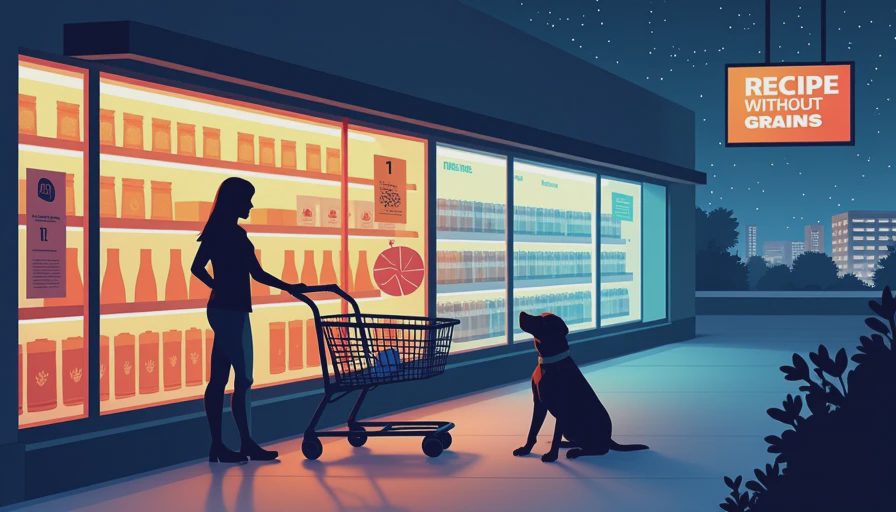
You are standing in the pet food aisle, comparing grain free dog food brands while your dog waits at home for dinner. One bag promises ancestral nutrition. Another highlights peas, lentils, or sweet potatoes in large type. A third says it contains no corn, wheat, or soy, as if those ingredients are automatically harmful. Flip the bag. Read the panel. That is where the useful information begins.
Grain-free is a formulation choice, not a guarantee of superior nutrition. Some dogs do well on these diets, but most do not need grains removed unless there is a specific medical reason. The right decision depends on the complete recipe, your dog's health, and whether the food is nutritionally complete for the correct life stage.
What grain-free actually means
A grain-free food contains no cereal grains such as corn, wheat, rice, barley, oats, or sorghum. It can still contain carbohydrates from potatoes, peas, lentils, tapioca, chickpeas, or sweet potatoes. In other words, grain-free does not mean carbohydrate-free, low-carbohydrate, or automatically closer to a wolf's diet.
This distinction matters because front-of-bag language is marketing, not a nutrition assessment. “With real meat” can describe a food that contains a small amount of meat along with many other ingredients. “Ancient recipe” does not tell you whether the diet meets your dog's nutrient requirements. Here's what the panel says—and what it doesn't: the ingredient list shows what goes into the recipe by weight before cooking, but it does not reveal the full nutrient profile or how well the food was tested.
Look for the nutritional adequacy statement from the Association of American Feed Control Officials, commonly called AAFCO. It should say the food is complete and balanced for a defined life stage, such as adult maintenance, growth, or all life stages. That statement is more useful than a picture of a steak on the package.
Why some owners consider grain free dog food brands
Owners often explore grain-free diets after noticing itching, loose stool, ear problems, or a belief that their dog has a food allergy. Those concerns deserve attention, but removing grains is rarely the best diagnostic first step. Dogs can react to proteins such as beef, chicken, or dairy, and true food allergies are less common than environmental allergies. A veterinary examination can separate an allergy from fleas, infection, inflammatory bowel disease, or another problem.
A properly conducted elimination diet is the reliable way to investigate a suspected food allergy. It uses a veterinarian-selected diet with carefully controlled ingredients for a defined period, followed by a structured challenge. Switching casually between several grain free dog food brands can make the picture harder to interpret because each recipe may contain different proteins, legumes, fats, and flavor coatings.
There is also an ongoing concern about reports of diet-associated dilated cardiomyopathy, or DCM, in some dogs eating certain nontraditional diets. The FDA investigation raised questions about diets containing substantial amounts of peas, lentils, other pulses, and potatoes, but it did not establish that every grain-free food causes heart disease. The evidence is complex and still developing. Do not stop a prescribed diet or add supplements based on an internet post; talk with your veterinarian first.
How to compare grain free dog food brands
Start with the life-stage statement. A puppy needs a food formulated for growth, while a healthy adult dog generally needs adult maintenance. Large-breed puppies have additional calcium and growth considerations, so a generic adult or all-life-stages product is not automatically appropriate.
Next, identify the company behind the food. Look for clear contact information, qualified nutrition professionals, quality-control details, and an explanation of how the food's nutrient targets are established. Companies that conduct feeding trials provide different evidence from companies that only formulate recipes to meet a nutrient profile. Neither label alone answers every question, but transparency is valuable.
Then examine the guaranteed analysis and calorie information. Protein and fat percentages are listed on an as-fed basis, which makes direct comparisons difficult when moisture differs. Calories per cup or can provide a more practical starting point for feeding. A calorie-dense food can quietly add weight even when the measured portion looks small.
For example, a grain-free salmon recipe and a grain-inclusive chicken recipe may have similar protein percentages but very different calories, fat sources, and fiber levels. The word salmon does not settle the comparison. Your dog's stool quality, body condition, appetite, activity, and medical needs matter more than a single highlighted ingredient.
Examples on the store shelf
You may encounter grain free dog food brands from large manufacturers such as Purina, Hill's, Royal Canin, Iams, Blue Buffalo, Merrick, or Wellness, along with smaller boutique companies. Brand size alone does not prove that a food is good or bad. Product lines within one company can differ substantially, so evaluate the specific formula rather than treating the brand name as a shortcut.
A prescription hydrolyzed diet is different from an over-the-counter limited-ingredient diet. Hydrolyzed proteins are broken into smaller pieces to reduce the chance of an immune reaction, and these products are designed for controlled medical trials. An over-the-counter “limited ingredient” food may still contain trace proteins from manufacturing or a broader ingredient profile than the front label suggests.
If your dog is healthy and thriving on a complete and balanced grain-free food, an abrupt switch is not necessary simply because headlines are alarming. If your dog has heart disease, weakness, fainting, reduced stamina, or a new heart murmur, arrange veterinary care promptly. A veterinarian may recommend an examination, blood testing, chest imaging, or an echocardiogram depending on the findings.
A practical shopping routine
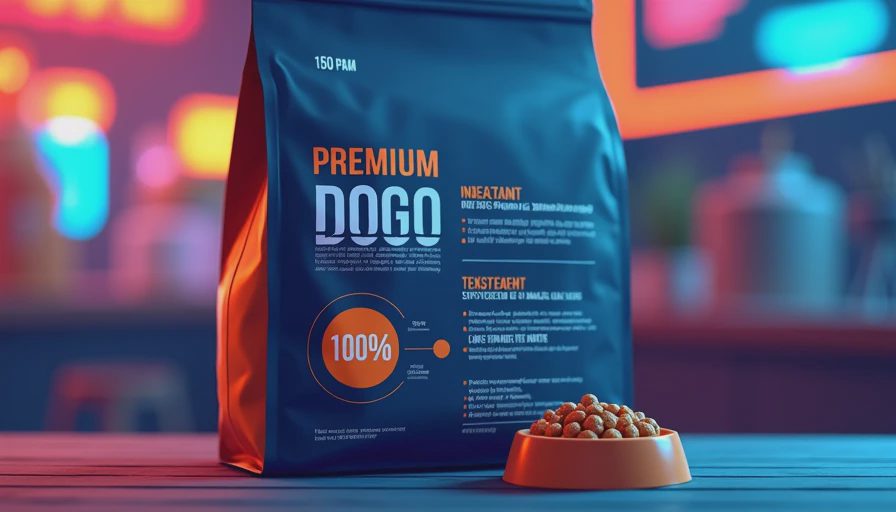
Before buying, write down your dog's age, current weight, body condition, activity level, and any diagnosed conditions. Take a photo of the current food's ingredient list and nutritional adequacy statement. At the store, compare calories per cup, protein sources, fat content, and the presence of peas, lentils, chickpeas, or potatoes. None of those ingredients is automatically toxic, but their prominence is worth discussing when a dog has a cardiac concern.
Avoid changing several variables at once. If your veterinarian recommends a new food, transition over roughly seven days unless there is a medical reason to do otherwise. Begin with mostly the current diet and a smaller portion of the new one, then gradually increase the new food. Monitor appetite, stool consistency, vomiting, itching, and body weight. A simple notebook is often more useful than memory.
The best choice among grain free dog food brands is the one that fits your dog's medical needs, meets established nutrient requirements, comes from a transparent manufacturer, and can be fed in an appropriate portion. Price matters too. A $70 bag is not necessarily better than a $45 bag if both provide similar calories and complete nutrition. Feeding cost depends on calorie density, not just the sticker price.
The takeaway for your dog's bowl
Grains are not filler by definition, and grain-free is not a synonym for premium. Some dogs require a carefully selected diet for allergy management or another condition, while many healthy dogs can eat either grain-inclusive or grain-free food successfully. The label claim alone cannot make that decision.
If you are comparing grain free dog food brands today, begin with the back of the bag, not the advertising panel. Confirm the AAFCO adequacy statement, calculate calories, inspect the major ingredients, and ask your veterinarian whether the recipe suits your dog's age and health. For a suspected allergy or heart concern, get professional guidance before experimenting.
Your one action today: flip the bag, read the panel, and take a photo of the complete label before you put the food in your cart.



No notes yet — write the first one.