You are standing in the freezer aisle, holding a bag of raw dog food while your dog watches from the cart like dinner has become a spectator sport. The package says ancestral, biologically appropriate, and complete. Those words sound reassuring, but they do not answer the most important questions. When comparing raw dog food brands, start with nutrition, safety, and quality control rather than the front-of-package story.
I am a board-certified veterinary nutritionist, and I have spent years reading pet food labels from both sides of the formulation table. Raw diets are not automatically dangerous, and they are not automatically superior. The useful question is whether a particular product is nutritionally appropriate for your dog and handled safely in your home.
What “complete and balanced” really tells you
The first panel to find is the nutritional adequacy statement. In the United States, a food labeled complete and balanced should identify the life stage it supports, such as growth, maintenance, or all life stages. It should also indicate whether the diet meets an Association of American Feed Control Officials nutrient profile or passed an AAFCO feeding trial.
That statement matters because raw meat alone is not a balanced canine diet. Muscle meat is generally high in protein and phosphorus but can be short on calcium. A recipe built around boneless meat can create an inappropriate calcium-to-phosphorus ratio, especially for puppies. Liver supplies important nutrients, but too much can provide excessive vitamin A. A food can contain attractive ingredients and still miss essential nutrients.
When reviewing raw dog food brands, look for the exact adequacy statement, not just phrases such as natural, prey model, or human grade. Ask whether the product is intended for adult maintenance or all life stages. A puppy, pregnant dog, senior dog, and healthy adult do not have identical nutritional needs.
How to assess ingredients and formulation
The ingredient list is useful, but it is not a report card by itself. Chicken, beef, turkey, salmon, organs, vegetables, and supplements can all appear in a sensible formula. The harder question is whether the finished recipe delivers required vitamins and minerals in reliable amounts.
Look for a company that names the person or team responsible for formulation. A board-certified veterinary nutritionist is a strong credential, although an experienced animal nutritionist or qualified food scientist can also contribute to a sound product. The company should be willing to provide a typical nutrient analysis, including calories, calcium, phosphorus, fat, protein, and key micronutrients.
Calorie information is particularly practical. A very fatty raw food may provide 500 or more calories per cup, while another product may provide considerably less. Feeding by scoop alone can lead to unwanted weight gain. Compare the calorie density with your dog’s current food and adjust portions gradually. Treats, chews, and toppers count too.
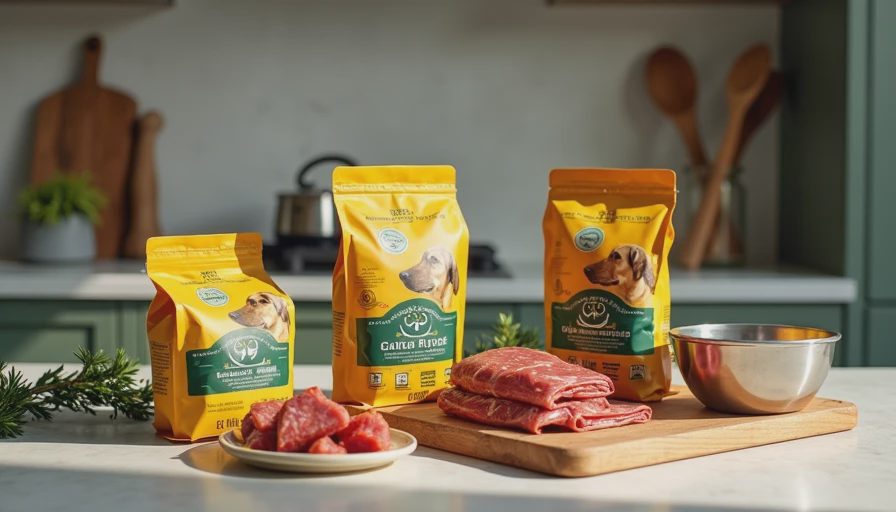
Here's what the panel says—and what it doesn't: an ingredient list tells you what goes into the recipe, but it does not prove that the food is safe from pathogens or nutritionally complete. Marketing terms such as farm raised, holistic, and premium are not substitutes for testing and formulation documentation.
Raw food safety starts before the bowl
Raw animal products can carry bacteria such as Salmonella, Listeria, and certain strains of E. coli. Dogs may show no signs while shedding organisms in feces or saliva. That creates a household concern, particularly when a home includes young children, older adults, pregnant people, or anyone with a weakened immune system.
If you use raw dog food brands, treat the product like raw chicken in your kitchen. Wash your hands after handling it. Use a separate cutting board and utensils. Thaw food in the refrigerator, not on the counter, and clean surfaces with hot, soapy water followed by an appropriate disinfectant. Do not let a dog carry raw food around the house. Pick up leftovers promptly rather than allowing a bowl to sit for hours.
Freezing can reduce some parasite risks, but it does not reliably eliminate every bacterial hazard. Freeze-dried raw products are shelf-stable until rehydrated, yet they are not necessarily sterile. Rehydration, handling, and storage still matter. Follow the package instructions and keep opened food cold.
Comparing quality control among brands
A company’s manufacturing practices deserve as much attention as its protein list. Ask whether ingredients and finished batches are tested for Salmonella and other pathogens, whether the facility follows a recognized food-safety plan, and whether the manufacturer can trace a product back to a specific batch. A clear recall procedure is a sign of responsible operations, not an admission that a company is uniquely bad.
Some raw dog food brands publish more detail than others. That transparency can include batch testing policies, feeding directions, calorie data, and contact information for technical questions. Be cautious when a company refuses to share basic nutrient information or responds to reasonable questions with slogans about nature and ancestral feeding.
Price can also reveal practical differences. A frozen commercial raw diet may cost $4 to $12 per day for a medium-sized dog, depending on calories and ingredients. Freeze-dried options often cost more per calorie. Compare the cost per 1,000 calories rather than the price of a bag, because package sizes vary dramatically.
Which dogs need extra caution?
Raw feeding deserves a more conservative discussion for puppies, dogs with pancreatitis, dogs with kidney or liver disease, and pets with immune problems. High-fat recipes can worsen digestive symptoms in susceptible dogs. Dogs with chronic kidney disease need carefully managed phosphorus and protein, not a generic raw formula selected because it contains fewer grains.
Food allergies also complicate the decision. A short ingredient list does not guarantee that a recipe is appropriate for an elimination trial, and cross-contact during manufacturing can undermine the result. A veterinarian can help decide whether a therapeutic diet, a cooked complete diet, or another approach makes more sense.
If your dog has vomiting, diarrhea, weight loss, persistent itching, or reduced appetite after a diet change, stop treating the issue as a simple adjustment period. Contact your veterinarian. Diet changes should usually happen over several days unless a clinician gives different instructions.
A practical buying checklist
Before placing a raw product in your cart, work through five questions. First, does it have a clear complete-and-balanced statement for your dog’s life stage? Second, can the company provide calories and a typical nutrient analysis? Third, who formulated the recipe, and what relevant credentials do they have? Fourth, how are ingredients and finished products tested for pathogens? Fifth, can you safely store, thaw, serve, and discard the food in your household?
If a product fails one of these questions, choose another product or discuss a home-prepared recipe with a veterinary nutritionist. A properly formulated cooked diet can be a sound alternative, and feeding a conventional complete commercial diet is not a nutritional failure. The goal is adequate nutrition with manageable risk, not membership in a feeding camp.
My single action step is simple: flip the bag. Read the adequacy statement, calorie information, storage directions, and manufacturer contact details before you read the marketing claims. That habit will make comparing raw dog food brands far more useful than chasing the most dramatic ingredient list. Discuss the final choice with your own veterinarian, especially if your dog is young, ill, pregnant, or medically complicated.




No notes yet — write the first one.