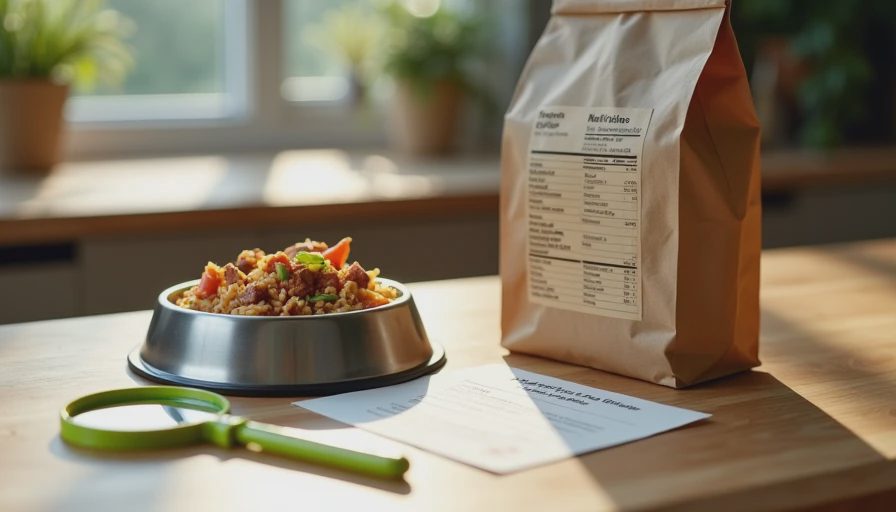
The Appeal of the Kitchen Bowl
There is a particular satisfaction in cooking for a dog. You choose the ingredients, you control the process, and you avoid the long commercial ingredient lists that many owners have been taught to distrust. For some households home-cooked feeding becomes a daily expression of care.
I have formulated home-cooked diets for medical cases and I have reviewed dozens of owner-created recipes that were incomplete or unbalanced. The difference between the two is large. This post separates the situations in which a home-cooked diet is a legitimate clinical tool from the situations in which it is mostly extra labor with limited upside.
When Home-Cooked Is Medically Useful
There are clear clinical scenarios in which a properly designed home-cooked diet is one of the better options available.
Severe or complex food allergies sometimes require protein sources that are not commercially available in complete diets. A veterinary nutritionist can construct a balanced recipe around an unusual but tolerated protein and carbohydrate pair.
Certain metabolic or urinary conditions need nutrient levels that fall outside the ranges of existing commercial therapeutic foods. Precise phosphorus, protein, sodium, or calcium targets can be achieved more tightly in a custom recipe than in a mass-produced product.
Some dogs refuse every commercial option after illness or prolonged hospitalization. A highly palatable, gently cooked home diet can serve as a bridge while appetite recovers.
In these cases the home-cooked diet is not a lifestyle preference. It is a targeted medical intervention. The recipe must still be complete and balanced for the intended purpose, which almost always requires professional formulation software and follow-up monitoring.
When Home-Cooked Is Mostly Extra Work
Many owners begin home cooking because they want “better ingredients,” “fewer processed foods,” or “more control.” Those goals are understandable. The nutritional reality is that a complete commercial diet already supplies the essential nutrients in controlled amounts. Replacing it with a home-cooked version only improves outcomes if the new recipe is at least as complete and the owner can execute it consistently.
Most internet recipes fail basic completeness checks. Common shortfalls include insufficient calcium, incorrect calcium-to-phosphorus ratios, missing trace minerals, inadequate essential fatty acids, and vitamin deficiencies that only appear after months of feeding. Dogs are good at looking healthy while these deficits accumulate.
Even when a solid recipe is used, the daily labor is real: sourcing, weighing, cooking, balancing the vitamin-mineral premix, storing, and thawing. Travel, illness, or schedule changes quickly disrupt the routine. Many households eventually return to commercial food after discovering that the nutritional and logistical burden is higher than expected.
If the dog is healthy, eating a well-formulated commercial diet, and maintaining good body condition and laboratory values, switching to home-cooked feeding rarely produces measurable health gains proportional to the work involved.
The Non-Negotiable Requirements for Safety

Any long-term home-cooked diet needs three elements:
A recipe formulated or approved by a board-certified veterinary nutritionist (or generated with validated software under professional oversight). Random online recipes and most books do not meet this standard.
A consistent source of the exact vitamin-mineral premix specified in the recipe. Omitting or substituting the premix is one of the fastest ways to create deficiencies.
Periodic monitoring—body weight, muscle condition, and, when indicated, bloodwork—to catch imbalances before they become clinical.
Without those three pieces, home cooking is an uncontrolled experiment. I have seen the resulting deficiencies more times than I would like.
Cost and Time Reality Check
Home-cooked diets are often assumed to be cheaper. When the recipe is properly balanced and includes the necessary premix, the ingredient cost is frequently comparable to or higher than a mid-to-premium commercial diet. The time cost is always higher.
Owners who value the process itself and can sustain the labor may still choose home cooking for healthy dogs. That is a legitimate personal decision. It should simply be recognized as a preference rather than a nutritional upgrade.
Practical Decision Framework
I ask owners four questions:
Is there a medical reason that commercial therapeutic or over-the-counter diets cannot meet?
Are you prepared to use a professionally formulated recipe and the specified premix for every batch?
Can you maintain the preparation routine through travel, busy periods, and fatigue?
Are you willing to monitor the dog’s weight, condition, and laboratory values as needed?
If the answers are yes, home-cooked feeding can be a sound choice. If the answers are mostly no, a high-quality commercial diet is usually the more reliable and lower-stress route.
What I Do in My Own Kitchen
I occasionally cook for my dogs as a temporary measure—bland meals during gastrointestinal upset or high-value recovery food after procedures. I do not feed long-term home-cooked diets to healthy dogs. The commercial foods I trust already meet the nutrient profiles I would target, and the consistency is higher than I can guarantee on busy weeks.
When I do write home-cooked recipes for clients, they come with precise gram weights, the exact supplement product to use, storage instructions, and a monitoring schedule. Anything less is incomplete.
Closing the Trial
Home-cooked diets are neither inherently superior nor inherently dangerous. Their value depends entirely on whether they are necessary, whether they are complete, and whether the household can execute them consistently.
When a medical need exists and the recipe is professionally designed, they are a valuable tool. When the dog is healthy and the commercial alternative is already appropriate, they are often just a lot of extra work.
Flip the recipe (or the bag) and ask the harder questions about completeness and sustainability. The answer will tell you whether the kitchen effort is serving the dog or simply serving a preference.




No notes yet — write the first one.