I spend a lot of time standing in the pet food aisle with owners who are trying to do right by their dog or cat without getting steamrolled by label language. When people ask me about chicken meal vs by product, I start with the same move: flip the bag. Read the panel. The front of the package is built to sell you a feeling; the back is where the actual nutrition story lives. If you know what those two ingredients mean, you can stop treating them like good-versus-bad moral choices and start using them the way nutritionists do: as clues about protein, moisture, cost, and how the food was made.
What chicken meal actually means
Chicken meal is chicken that has had most of its moisture removed before it is added to the food. That concentration matters. Fresh chicken can look impressive on an ingredient panel, but a lot of that weight is water that disappears during cooking. Meal gives you more protein and minerals per pound because the water is already gone. In chicken meal vs by product discussions, chicken meal usually sounds cleaner to shoppers because it is easy to picture as "just chicken," but the real test is not the name. It is whether the finished diet is complete and balanced for the life stage printed on the bag.
A well-formulated food with chicken meal can be a solid option for puppies, adults, or senior pets, depending on the rest of the recipe. I care more about the total amino acid profile, calorie density, and feeding directions than about whether the bag uses a more appealing marketing phrase on the front. A bag can say "with chicken" and still be less protein-dense than a food built around chicken meal.
What by-product actually brings to the bowl
By-product gets a bad reputation because the word sounds vague, but vague does not mean worthless. In pet food, chicken by-product can include organs and other edible parts of the chicken that people do not usually buy for dinner, yet dogs and cats can use those tissues very well. Those parts can contribute nutrients such as vitamin A, iron, and other compounds that muscle meat alone may not supply in the same amount. In chicken meal vs by product debates, this is the part people miss: by-product is not a synonym for trash.
Here is what the panel says, and what it does not. The ingredient list tells you what was used, not whether the formula is excellent. A food with chicken by-product can still be well made if the company controls sourcing, tests nutrient levels, and formulates for the right species and life stage. A food with chicken meal can still be mediocre if the rest of the formula is overloaded with starch and the calorie count is off. The ingredient name matters, but it is only one line in a much larger story.
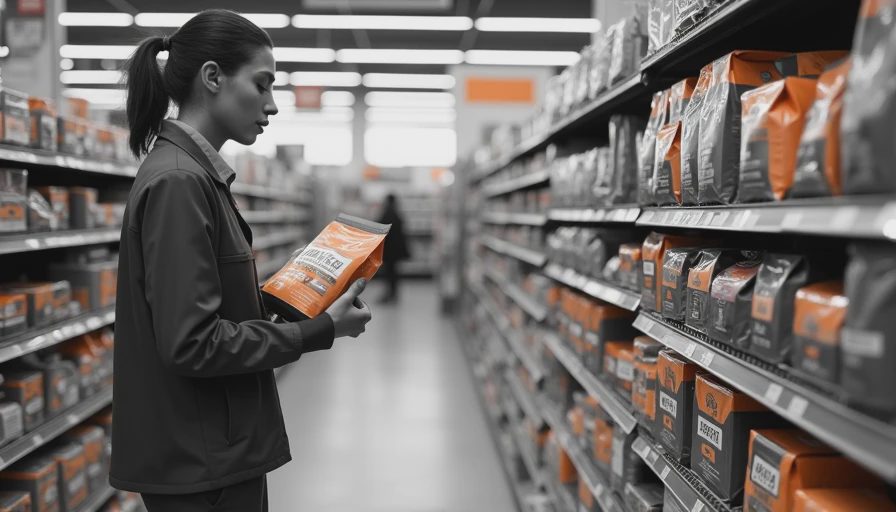
What the panel says about quality
Quality control is where a lot of label confusion clears up. Look for a named species statement, like "complete and balanced for adult maintenance," and then find the guaranteed analysis and calorie content. Those numbers tell you far more than the front-of-bag artwork. If a food has 28 percent protein and 390 calories per cup, that is a very different feeding experience from a food with 24 percent protein and 290 calories per cup, even if both contain chicken ingredients. This is why shoppers can get burned by chasing one ingredient instead of reading the whole panel.
Brand positioning matters here too. Mainstream companies such as Purina, Hill's, Royal Canin, and Iams often use by-products in some formulas because they are trying to build consistent, nutrient-dense foods at different price points. Boutique brands often lean harder on marketing words like "real chicken" or "farm-raised," but that does not automatically make the recipe better. On a typical shelf, a 30-pound bag might run from about $35 on the low end to $75 or more for premium formulas, and the better buy is the one your pet thrives on, not the one with the loudest front panel.
When the difference matters most
This is where chicken meal vs by product stops being an abstract label debate and starts becoming a practical question. For a healthy dog or cat, either ingredient can fit into a good diet. For a pet with a diagnosed chicken allergy, neither one belongs in the bowl, because both still come from chicken. For a cat with a small appetite, a more concentrated formula may help because cats need enough amino acids in less food volume. For a pet with kidney disease, pancreatitis, or chronic digestive trouble, the single ingredient name is not the issue; the full prescription or therapeutic plan is.
If your animal has a medical diet need, bring the actual bag to your veterinarian instead of trying to decode it from memory at home. I can tell you that a bag is not bad just because it uses by-product, but I can also tell you that no ingredient name rescues a formula that is wrong for the patient in front of you. That is the part owners often learn the hard way after buying three different bags and still seeing loose stool, itching, or weight gain.

How to shop without getting spun
Start with the species and life-stage statement. Then check the guaranteed analysis for protein, fat, fiber, and moisture, and look for calories per cup or per can. If the numbers are hidden or the bag is coy about the basics, that is a yellow flag. Next, scan the ingredient list for the first several items and ask whether the food is built around a clear protein source or padded with a long list of starches, oils, and flavoring.
If you are comparing two foods and one uses chicken meal while the other uses chicken by-product, do not stop there. Ask which food your pet digests better, which one fits your budget, and which one helps keep stool quality, body condition, and energy level where they should be. A budget food that your pet eats reliably and maintains weight on can beat a more expensive bag that sounds better in theory but causes vomiting or waste.
A simple rule for the aisle
The simple rule is this: do not shop by fear. Chicken meal is a concentrated protein ingredient. Chicken by-product can be a useful, nutrient-rich ingredient. Neither one is automatically superior in every recipe, and neither one should be treated like a red flag by itself. The real question is whether the whole diet is appropriate for your dog or cat.
Flip the bag. Read the panel. If you want a second set of eyes, ask your veterinarian or a board-certified veterinary nutritionist to look at the actual label with you before you commit to a new food.





No notes yet — write the first one.