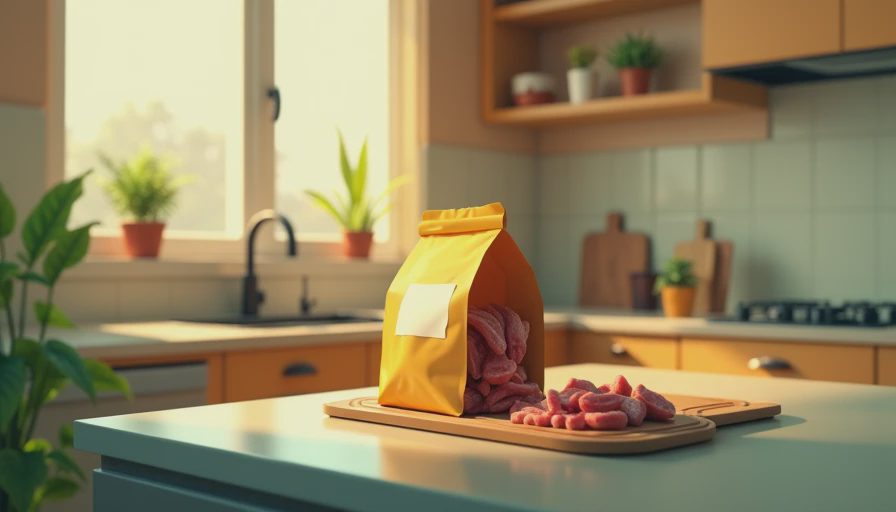
If you are standing in the freezer aisle wondering whether raw cat food is worth the price, the bag can help more than the front label does. Flip the bag. Read the panel. Then compare what it promises with what your cat actually needs. I will keep this practical, because the goal is not to win an internet argument; it is to feed a cat safely and well. If your cat has a medical problem, talk with your veterinarian before changing diets.
What raw cat food gets right, and what it doesn't
The reason raw cat food keeps pulling people in is simple: it sounds close to what cats would eat in nature, and many cats seem to love the taste and texture. For a picky eater, that matters. A food that a cat will not touch is not a useful food, no matter how elegant the ingredient list looks.
Here’s what the panel says — and what it doesn’t. Raw is not automatically better for teeth, digestion, allergies, or overall health. The evidence for clear health advantages over well-made canned or dry food is thin. Cats need complete nutrition, not a romance novel written in meat terms. What matters is whether the diet supplies taurine, calcium, vitamins, trace minerals, and enough calories in the right balance.
A lot of owners hear the word raw and think natural equals safe. That is where the conversation gets fuzzy. Natural poison ivy is still natural. The same logic applies here: the appeal is real, but the nutritional proof is not magical. A good canned diet can be every bit as appropriate as a raw one, and for many cats it is easier to store, easier to portion, and far less expensive.

The safety issues that matter most in a real home
The biggest concern with raw cat food is not philosophy; it is microbiology. Raw meat can carry Salmonella, Listeria, and other bacteria. Even if a cat does not look sick, the food can still contaminate bowls, counters, hands, and the kid who grabs the sponge later. That is why households with infants, older adults, pregnant people, or anyone who is immunocompromised need to think carefully before bringing raw into the kitchen.
There is also the question of bone and fat. Some raw products use ground bone for calcium, which can be fine when the recipe is designed correctly, but whole bone pieces can crack teeth or cause constipation. High-fat diets can also be rough on cats that have a history of digestive upset. Here’s what the panel says — and what it doesn’t: the ingredient list can hint at risk, but it cannot tell you whether the food was handled well, stored correctly, or balanced by someone who understands feline nutrition.
Home-prepared versions are where I see the most trouble. A cat diet that looks impressive on social media can still be short on taurine, iodine, vitamin E, or calcium. Cats are not forgiving about imbalance. They need the right amino acids every day, not just enough meat in the bowl to look convincing. If you are making food at home, a recipe from a board-certified veterinary nutritionist is the standard I would want in my own kitchen.
How to read a raw label without getting lost
The first line I want you to find is the nutritional adequacy statement. If the package says complete and balanced for growth, reproduction, adult maintenance, or all life stages, that is a start. If it says for intermittent or supplemental feeding only, that is not a full-time diet. In plain English, it may be a topper, a treat, or a side dish, not dinner.
Next, look past the front-panel marketing. Words like premium, ancestral, ancestral-inspired, or biologically appropriate are not nutrition claims. They are branding. Brands such as Stella & Chewy's, Primal, and Instinct make raw products that range from complete meals to toppers, so the logo alone tells you very little. The back of the bag tells you much more. Check the guaranteed analysis, the calorie content, and the feeding directions. If the label does not clearly say how much to feed by weight or calories, be suspicious.
This is also where many people miss the difference between frozen and freeze-dried products. Freeze-dried raw cat food is shelf-stable before opening, but it can be expensive and sometimes is meant to be rehydrated. Frozen patties or chubs need freezer space and careful thawing. In both cases, the real question is not whether the food sounds artisanal. It is whether it meets feline nutrient needs in a form you can safely use every week.
What it costs compared with cooked or kibble
Raw is usually a premium purchase, and I say that without judgment. For an average 10-pound cat eating roughly 200 to 250 calories a day, a commercial raw plan can land around $90 to $240 a month, depending on the brand and whether you buy frozen or freeze-dried. A quality canned diet often falls lower, sometimes around $45 to $90 a month, while many dry foods cost less still. Those are broad ranges, but they are realistic enough to help you budget before you fall in love with the marketing.
The hidden cost is time. Raw feeding usually means more shopping trips, more freezer space, more dishwashing, and more attention to thawing and sanitation. If you travel often, live in a small apartment, or just want feeding to be easy, that matters. A food that fits your life is more sustainable than one that wins the argument in theory and loses it on a Tuesday night when the freezer is full and the cat is yelling.
A practical way to test the idea with your veterinarian
If raw cat food is still on your shortlist, use a simple filter. Is the cat healthy? Is the household able to handle the food safely? Is the product clearly complete and balanced? Does the recipe come from a company that employs qualified nutrition experts and publishes a real nutrient profile? If the answer to any of those is no, keep shopping.
I would be especially cautious with kittens, pregnant cats, cats with kidney disease, diabetes, urinary issues, or a history of pancreatitis. Those cats often need more tailored nutrition than a trendy package can provide. For a healthy adult cat, a slow transition over five to seven days is usually easier on the stomach than a hard switch. Watch stool quality, appetite, and body weight. If vomiting, diarrhea, or food refusal shows up, pause and call your veterinarian.
Raw cat food is not a shortcut to better nutrition, and it is not automatically dangerous either. It is a tool. Sometimes it is the right tool, and sometimes a good canned diet is the smarter, safer, cheaper answer. The only way to know is to compare the label, the handling requirements, and your cat’s health needs. Flip the bag. Read the panel.




No notes yet — write the first one.