You are standing in the pet food aisle, comparing two bags that both promise complete nutrition. One lists 30% protein; the other lists 26%. Is the first automatically better? Not so fast. The guaranteed analysis pet food panel gives you useful information, but it is not a full nutrition report card. It tells you the minimum or maximum levels of a few nutrients, usually on an as-fed basis. To use it well, you need to know what those numbers mean and what they leave out.
I have spent years reading labels as a veterinarian and board-certified veterinary nutritionist. My advice is simple: flip the bag, read the panel, then put the numbers in context. A food with impressive percentages can still be a poor match for a growing puppy, an overweight cat, or a dog with kidney disease.
What the guaranteed analysis actually tells you
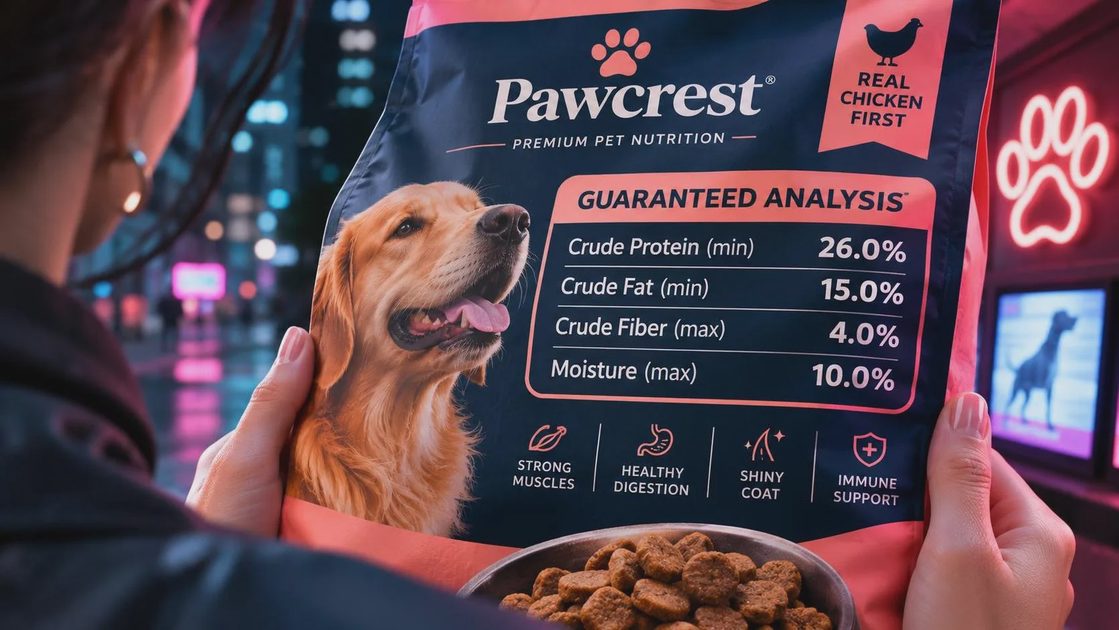
The guaranteed analysis pet food section usually lists crude protein, crude fat, crude fiber, and moisture. Some products also provide ash or other nutrients, especially therapeutic diets. “Crude” does not mean low quality or suspicious. It describes the laboratory method used to estimate a nutrient category. Crude protein, for example, is estimated largely from nitrogen content; it does not identify the source, digestibility, or amino acid balance of that protein.
Protein and fat are generally listed as minimum percentages. The manufacturer guarantees that the food contains at least that amount under its testing and quality-control system. Fiber and moisture are commonly listed as maximum percentages. That means the actual level can be lower than the stated maximum. These numbers are boundaries, not promises that every batch contains exactly the printed amount.
Here is what the panel says — and what it doesn't. It does not tell you whether the protein comes from chicken, beef, soy, or a combination. It does not reveal the food’s calorie density, taurine content, calcium-to-phosphorus ratio, or vitamin and mineral adequacy unless that information appears elsewhere on the package.
Why the percentages can mislead
The most common mistake I see with guaranteed analysis pet food is comparing labels without accounting for moisture. Canned food may contain 75% moisture, while dry kibble may contain 10%. A canned recipe showing 10% protein can provide more protein on a dry-matter basis than kibble showing 30% protein.
To compare fairly, remove the water mathematically. For protein, divide the as-fed percentage by 100 minus the moisture percentage, then multiply by 100. A dry food with 30% protein and 10% moisture contains about 33% protein on a dry-matter basis: 30 divided by 90, multiplied by 100. A wet food with 10% protein and 75% moisture contains about 40% protein on a dry-matter basis: 10 divided by 25, multiplied by 100.
This does not mean the wet food is automatically superior. Dry-matter comparison is a tool for apples-to-apples analysis, not a final judgment. Calories, portion size, nutrient balance, palatability, dental considerations, and your pet’s medical needs still matter.
The same calculation works for fat and fiber. If a canned food lists 5% fat at 75% moisture, its dry-matter fat is about 20%. That may be important when choosing food for a pet that gains weight easily or needs a lower-fat diet for a gastrointestinal condition.
Protein, fat, and fiber need context
A higher protein number is not automatically better for every animal. Healthy adult dogs and cats have different nutrient requirements, and kittens and puppies need diets formulated for growth. Senior status alone does not create one universal protein rule. Some older pets need more protein to help preserve muscle, while a cat with chronic kidney disease may need a veterinarian-guided diet with controlled phosphorus and appropriate protein.
Fat supplies concentrated energy and helps deliver essential fatty acids. However, two foods with the same guaranteed fat percentage can provide very different calories because of differences in carbohydrates, fiber, ingredients, and digestibility. A pet that eats too many calories can gain weight even when the food looks “lean” on the label.
Fiber is equally easy to misunderstand. A maximum crude fiber value does not describe all beneficial fermentable fibers, and it does not predict stool quality perfectly. Beet pulp, cellulose, pumpkin, and other fiber sources behave differently in the digestive tract. The ingredient list can provide clues, but feeding response is also important.
Find calories and the adequacy statement
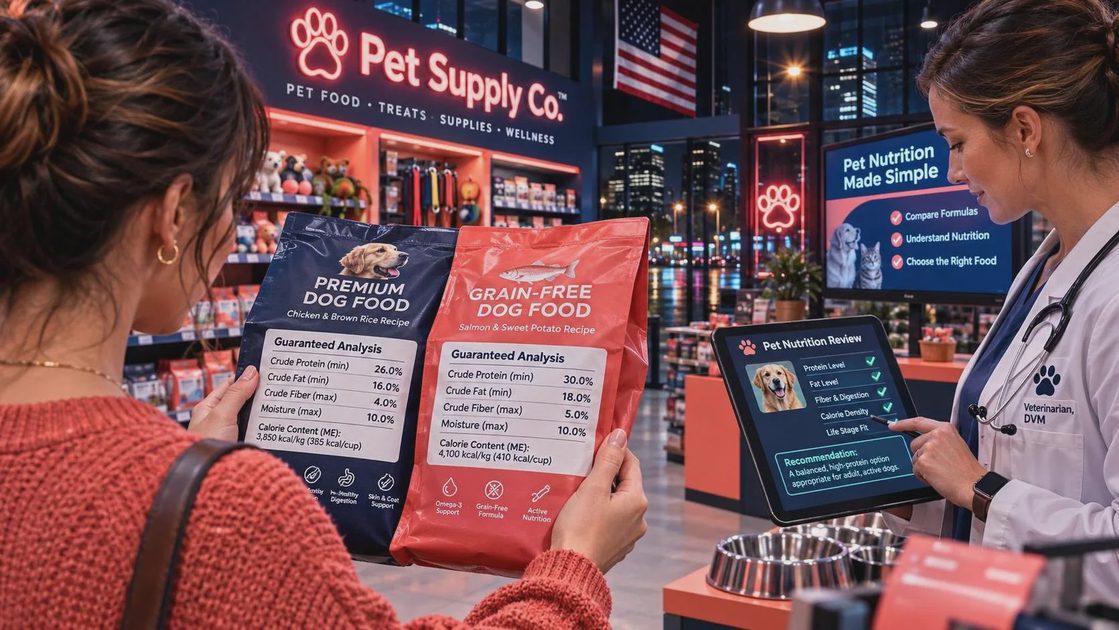
For everyday feeding decisions, calorie information may be more useful than a small difference in protein percentage. Look for a statement such as “Calorie Content” with calories per cup, can, kilogram, or other serving. Compare the portion your pet actually eats, not merely the package’s suggested amount. Feeding guides are starting points; body condition and weight trends tell you whether the portion is working.
Next, find the nutritional adequacy statement. It should indicate whether the food is complete and balanced for maintenance, growth, reproduction, or all life stages under established nutritional standards. A treat, topper, or supplemental product may not be designed to provide a complete diet. If it represents a large share of daily calories, it can unbalance the overall meal.
The guaranteed analysis pet food label and the adequacy statement answer different questions. The analysis describes selected nutrient levels. The adequacy statement addresses whether the finished diet is formulated or tested to meet a particular life-stage nutrient profile. You need both pieces before making a serious comparison.
A practical store-aisle comparison
Imagine comparing two dry adult dog foods. Food A lists 26% protein, 14% fat, 5% fiber, and 10% moisture. Food B lists 30% protein, 16% fat, 4% fiber, and 10% moisture. On a dry-matter basis, those protein levels are about 29% and 33%. That difference is real, but it does not prove Food B will improve your dog’s health.
Now check calories. If Food B contains 450 calories per cup and Food A contains 360, a dog fed the same volume receives substantially more energy from Food B. For a dog prone to weight gain, the calorie difference may matter more than the protein difference. Then check the adequacy statement, feeding instructions, manufacturer contact information, and whether the recipe suits the dog’s age and health.
This is also where brand transparency matters. Companies such as Purina, Hill’s, and Royal Canin publish detailed product information and offer veterinary or consumer support, while other brands may provide less context. A polished ingredient list is not a substitute for nutritional completeness and quality control.
Three questions to ask before buying
When reviewing guaranteed analysis pet food, ask whether you are comparing foods on the same moisture basis. Then ask how many calories your pet receives from the planned daily portion. Finally, ask whether the food is complete and balanced for the correct life stage or medical purpose.
If your pet has vomiting, chronic diarrhea, unexplained weight change, urinary disease, kidney disease, food allergies, or another diagnosed condition, do not choose a therapeutic diet from percentages alone. Your veterinarian can help determine whether a veterinary nutrition consultation is appropriate. Label reading is valuable, but it cannot replace an exam, diagnosis, or individualized feeding plan.
You can do one useful thing today: take a photo of your pet’s current label and compare its moisture, calories, adequacy statement, and guaranteed analysis pet food numbers with the next product you consider. Flip the bag. Read the panel. Then make the decision from the whole label, not one eye-catching percentage.





No notes yet — write the first one.