You are standing in the pet food aisle with a bag in one hand and your phone in the other. The number beside a recipe looks reassuring, but what does it actually measure? Dog food advisor ratings can help you compare products quickly, yet they should be treated as a starting point rather than a final nutritional verdict. A star score is not the same thing as a feeding trial, a veterinary recommendation, or a complete review of your dog's medical needs.
I understand why owners use rating sites. Pet food labels are crowded with terms such as chicken meal, crude protein, guaranteed analysis, and complete and balanced. A simple score feels easier than decoding all of that. The trouble begins when a high rating is mistaken for proof that a food is best for every dog. Nutrition is more like fitting a hiking boot than choosing a movie: the right choice depends on the individual wearing it.
What dog food advisor ratings actually tell you
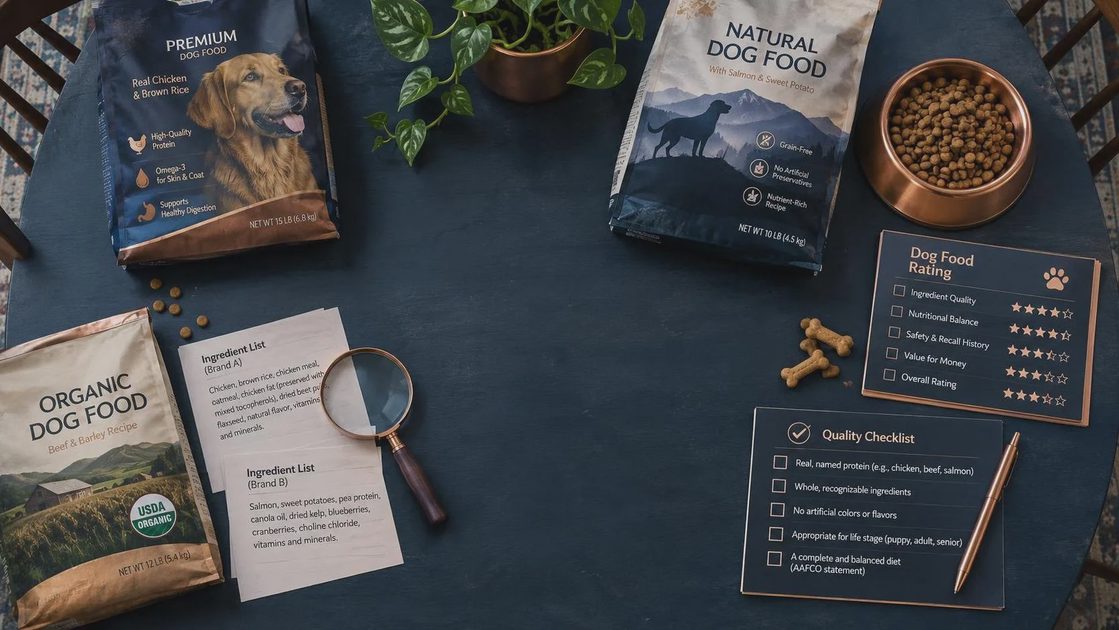
Most online ratings emphasize visible features of a product, including ingredient lists, protein and fat percentages, named meat ingredients, carbohydrate sources, and the presence or absence of certain additives. That information can reveal useful details. For example, you can identify whether a recipe is designed for puppies, adults, or all life stages, and you can compare its calories per cup with another product.
However, an ingredient-list score does not tell you everything about formulation quality. Ingredients are listed by weight before processing, so fresh chicken can appear near the top partly because it contains substantial water. Chicken meal is more concentrated because much of that water has been removed. Neither phrase, by itself, proves that one recipe is superior.
Here is what the panel says — and what it doesn't. It says what ingredients are present and provides guaranteed minimum or maximum nutrient values. It does not prove digestibility, nutrient absorption, manufacturing consistency, or whether the recipe is appropriate for a dog with kidney disease, pancreatitis, food allergy, or obesity.
Why a star score should not replace veterinary nutrition
Dog food advisor ratings are generally not medical assessments. A recipe can receive an impressive score while being unsuitable for a dog that needs restricted phosphorus, a novel protein, controlled calories, or a specific therapeutic nutrient profile. Conversely, a reasonably priced food with a less glamorous ingredient list can be an excellent fit for a healthy adult dog when it meets established nutritional standards and is fed in an appropriate amount.
Look for the nutritional adequacy statement on the package. In the United States, a complete and balanced claim should identify the life stage or stages for which the food is intended. That statement matters more than a marketing phrase such as holistic, premium, ancestral, or human-grade. Those terms can describe aspects of a product, but they do not replace evidence that the food supplies required nutrients.
For puppies, large-breed growth is an important distinction. A growing Great Dane has different mineral and calorie concerns than a mature Chihuahua. For a senior dog, age alone does not automatically require a senior formula, but arthritis, muscle loss, dental disease, or reduced activity may change the practical choice. Your veterinarian can help connect the label to those needs.
How to read the bag beside the rating
Start with the intended life stage, then check calories per cup or can. Two foods may both list 400 calories per cup, while a third contains 300. If your dog gains weight on the first recipe, changing to a lower-calorie option may be more useful than chasing a higher online score. Measure portions with a standard measuring cup, and use a kitchen scale when precise control matters.
Next, review the guaranteed analysis. Protein and fat percentages are listed as fed, meaning they include the food's moisture. Comparing a canned food with a dry food directly can therefore be misleading. A nutrition professional can convert the numbers to a dry-matter basis, which removes the water difference. You do not need to perform that calculation for every shopping trip, but it explains why the label can appear confusing.
Then consider the feeding directions as a starting estimate, not a command. A sedentary adult may need fewer calories than the package suggests, while a highly active dog may need more. Watch body condition, stool quality, appetite, and muscle tone over several weeks. A healthy body condition is more meaningful than a dramatic ingredient claim.
Common traps in online dog food reviews
Dog food advisor ratings can favor recipes that sound impressive because they contain several named meats, fruits, or vegetables. That wording is appealing, but a long ingredient list is not automatically a better formula. Ingredients appearing near the bottom may be present in tiny amounts and contribute little to overall nutrition. Likewise, the presence of a recognizable ingredient does not tell you whether the complete recipe has been tested for feeding performance.
Grain-free food deserves particular caution. Grain is not automatically a filler, and grains such as rice, corn, barley, and oats can provide digestible carbohydrates and other nutrients. The FDA has investigated reports of canine dilated cardiomyopathy involving some diets, many of which were labeled grain-free and contained high proportions of peas, lentils, or potatoes. The issue is complex and not a reason to panic, but it is a reason not to choose food solely because a rating praises the absence of grains.
Raw-food reviews can create a similar false sense of certainty. Raw diets carry potential risks involving bacterial contamination, nutritional imbalance, and bones, especially for households with young children, older adults, or immunocompromised family members. A confident review is not a substitute for a properly formulated recipe and a careful risk discussion.

A practical way to compare two foods
Imagine comparing a chicken-and-rice adult formula with a grain-free salmon recipe. First, confirm that both are complete and balanced for your dog's life stage. Second, compare calories per cup and feeding amounts. Third, check whether your dog has a reason to avoid a particular protein or ingredient. Fourth, look at the company information, including contact details, quality-control statements, and whether qualified nutritionists are involved in formulation.
The package cannot answer every question, but these steps reduce the influence of packaging language. If your dog has chronic vomiting, recurring ear infections, persistent diarrhea, urinary disease, or unexplained weight change, pause the online comparison and involve your veterinarian. A diet trial for a suspected food allergy, for example, needs strict consistency; random treats can undermine the result.
When changing foods, transition over several days by mixing increasing amounts of the new recipe with the old one. Some dogs need a slower change, particularly those with sensitive gastrointestinal systems. Stop and call your veterinary team if there is repeated vomiting, severe diarrhea, refusal to eat, or marked lethargy.
The better question to ask
Instead of asking whether dog food advisor ratings identify the single best food, ask whether a product fits your dog's nutritional requirements, health history, budget, and daily routine. A food that your dog eats willingly, maintains a healthy body condition on, and tolerates well can be a sensible choice when it is complete and balanced for the correct life stage.
Online reviews are useful for generating questions. They are less useful as final authorities, especially when they reduce formulation, quality control, and medical nutrition to one number. Brands such as Purina, Hill's, Royal Canin, and Iams use different product lines and pricing strategies, so compare the specific formula rather than assuming every recipe from a company is identical. Cost per day is also more informative than bag price: divide the package cost by the number of daily portions it provides.
If you are shopping today, take a picture of the front and back panels and bring them to your veterinarian. Ask about adequacy, calories, protein sources, and whether the recipe suits your dog's life stage and health. Then flip the bag. Read the panel.


No notes yet — write the first one.