I’ve stood in enough pet food aisles to know the moment: a driver lifts a frozen patty pack, turns it over, and says the same thing I hear every week in consults. A raw diet for dogs sounds cleaner, more natural, and maybe even healthier than the bag of kibble next to it. Here’s what the panel says — and what it doesn’t. The front of the package can talk about ancestry, shine, and premium ingredients all day long. The back is where the real test lives: complete and balanced nutrition, safe handling, and whether the recipe can actually support the dog in front of you.
What a raw diet for dogs is, and what it is not
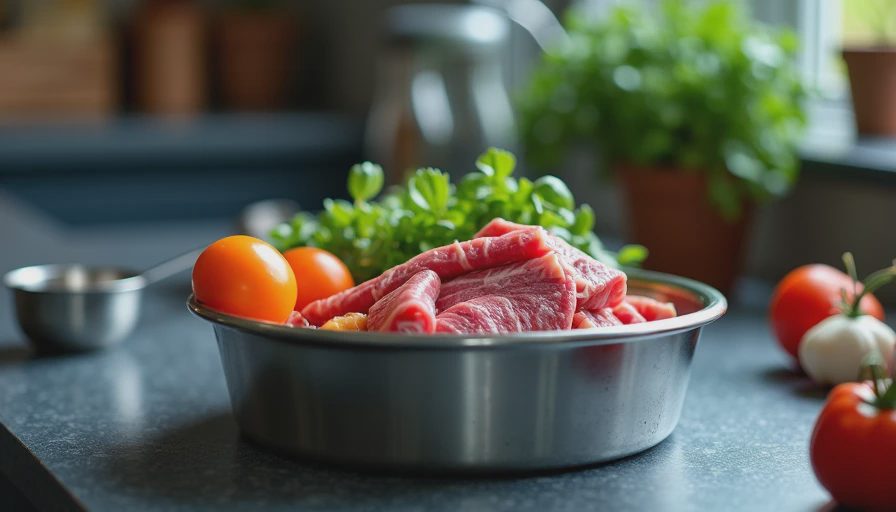
A raw diet for dogs usually means uncooked meat, organs, bone, and sometimes eggs, vegetables, or supplements. Some versions are homemade. Others are commercial frozen patties, tubs, or freeze-dried nuggets. The label may look simple, but simplicity is not the same thing as nutritional completeness. A dog does not need a menu that sounds rustic. A dog needs protein, fat, vitamins, minerals, and the right amount of energy in the right proportions.
That is where the gap starts. A homemade plan built from chicken thighs and carrots can look wholesome and still miss calcium, iodine, zinc, copper, vitamin D, or essential fatty acids. That matters more than the marketing language on the front. If a recipe is not formulated by a veterinary nutritionist or supported by a complete-and-balanced statement, you are guessing at a math problem your dog has to eat every day. A raw diet for dogs can be done correctly, but the correct version is much less casual than social media makes it sound.
The nutrition math that matters most
When I flip a raw package over, I look first for a statement that says the food is complete and balanced for a life stage. That tells you the product was built to meet nutrient targets, not just to look impressive in a freezer aisle. For adult dogs, that is the minimum bar. For puppies, pregnant dogs, and nursing dogs, the bar is higher because growth exposes mistakes quickly. Too little calcium can hurt bone development. Too much can be just as problematic, especially in large-breed puppies.
The other quiet issue is bone. People hear “raw” and assume bone automatically solves minerals, but too much bone can create constipation and push calcium too high. On the other hand, too little bone or the wrong supplement plan can leave the diet short on calcium and off-balance with phosphorus. That ratio is not trivia. It is one of the core jobs of a complete diet. If you ever see a homemade recipe built from muscle meat alone, or a tray of meat with a few token vegetables, treat it like a half-written homework assignment.

Safety and handling: the part the glossy bag skips
This is the part that gets waved away in a lot of raw feeding groups, and it deserves a clear look. Raw meat can carry Salmonella, Listeria, Campylobacter, and other bacteria. Healthy dogs may shed those organisms in their stool even when they never look sick. That can matter for kids, older adults, anyone with a weakened immune system, and the person washing the bowls at 6 a.m. In a kitchen, the issue is not fear. It is basic food handling.
If you choose this route, keep the food frozen until use, thaw it in the refrigerator, wash hands with soap, and clean bowls, counters, and utensils with hot water and detergent. Do not leave thawed meat sitting on the counter while the dog “decides.” Do not use the same cutting board for your salad and the dog’s dinner. A raw diet for dogs asks more of the kitchen than most owners expect, and that hidden labor has a cost all its own. The same is true for travel. A bag of kibble is easier to tote than a cooler full of patties on a road trip.
Cost, convenience, and who ends up switching back
Commercial raw diets are usually expensive. A small dog may cost a few dollars a day; a medium or large dog can run into the $120 to $250 per month range, sometimes more if the diet is freeze-dried or highly specialized. Homemade raw can look cheaper on paper, but once you buy supplements, grind equipment, freezer space, and the right ingredients in the right amounts, the savings often shrink. I have watched plenty of owners start with a full freezer and a very determined plan, then quietly drift back to a simpler diet because life got busy.
That is not failure. That is information. A feeding plan has to fit the household that actually exists, not the one on the label. If a family has kids, a shared kitchen, and a dog that inhales dinner before the bowl hits the floor, convenience matters. So does consistency. A diet that is nutritionally excellent but hard to store, prep, and serve tends to get improvized. Improvisation is where nutrition problems start.
How to compare raw with cooked and kibble at the store
If you are standing in front of three choices, compare them the same way every time. Start with the nutrition statement. Then look for a life-stage claim. Then look for the calorie density, because a bulky-looking meal can still be energy-poor. Finally, ask how easy the food is to serve cleanly and repeatably for the next six months. A raw diet for dogs should not win the comparison just because it sounds more natural. It should win because the math, safety plan, and logistics all hold up.
Cooked fresh foods and well-formulated kibble can do that too. Some owners prefer the convenience of shelf-stable food and a scoop. Others want the texture or ingredient list of a frozen or freeze-dried option. The right answer is the one you can afford, store, and feed accurately without turning dinner into a science project. Here’s what the panel says — and what it doesn’t: “premium” is not a nutrient claim. “Natural” is not a complete feeding plan. The panel is the part that tells the truth.
Questions to ask your veterinarian before you try it
Bring the exact brand, recipe, or homemade formula to your veterinarian and ask three plain questions. Does it meet your dog’s life-stage needs? Is it safe for everyone in the household to handle? And is there any reason your individual dog should not be on it, such as pancreatitis, a history of food-borne illness concerns, or a growth problem in a young dog? Those are practical questions, not scare tactics.
If you want to try a raw diet for dogs, do it with eyes open, not because a label promised ancestral purity. The best version is planned, measured, and checked against actual nutrient needs. The rushed version is what leads to expensive mistakes. Flip the bag. Read the panel. Then, if the numbers still look promising, take them to your veterinarian before you buy the freezer full of patties.



No notes yet — write the first one.