You notice your dog asking to go outside again ten minutes after the last trip. Then there is a small accident by the door, or your dog squats without producing much urine. These are common dog UTI symptoms, but they can also point to bladder stones, kidney disease, diabetes, or another problem that looks similar at home. A urinary tract infection needs a veterinarian’s diagnosis, not a guess based on a home test or a supplement advertisement.
Common dog UTI symptoms
The urinary tract includes the kidneys, ureters, bladder, and urethra. Most infections discussed by owners involve the bladder or lower urinary tract. Watch for a change from your dog’s normal bathroom routine, especially when several signs appear together.
Common dog UTI symptoms include frequent requests to urinate, repeated squatting, straining, passing only a few drops, accidents in a previously house-trained dog, or urine that smells unusually strong. Some dogs lick around the urinary opening more often. Others seem uncomfortable, restless, or reluctant to move after urinating. Blood can make urine look pink, red, or tea-colored, although blood is not always visible.
Pain does not look the same in every dog. A normally cheerful dog may become quiet, withdraw, pant, or turn away from food. A dog with a bladder infection can still wag its tail and eat normally, so a normal appetite does not rule out illness. Puppies, senior dogs, and dogs with other medical conditions deserve particular attention when their bathroom habits change.
How a veterinarian finds the cause
The signs alone cannot tell you whether bacteria are involved. Your veterinarian will usually ask about drinking, urination, medications, previous infections, and recent changes at home. A physical examination helps identify discomfort and other clues. Urinalysis examines the urine for concentration, blood, inflammatory cells, crystals, and other findings. A urine culture can identify bacteria and help select an appropriate antibiotic, especially when infections recur or treatment has failed before.
This distinction matters because not every case of dog UTI symptoms is actually a urinary infection. Bladder stones can irritate the bladder and cause blood or straining. Increased thirst and urination can occur with diabetes or kidney disease. Incontinence, prostate disease, anatomical abnormalities, and certain medications can also create similar patterns. Giving leftover antibiotics can temporarily blur the picture while failing to treat the real cause.
Bring a fresh urine sample only if your clinic requests one and tells you how to collect it. A sample gathered from a clean, shallow container may be useful for some tests, but a culture often requires a specially collected sample to reduce contamination. Your clinic can explain the right method.
When dog UTI symptoms are an emergency
Call your veterinarian promptly for frequent straining, visible blood, painful urination, or a sudden change in bathroom habits. Seek urgent veterinary care if your dog repeatedly tries to urinate but produces little or nothing, cries out, vomits, becomes very weak, has a painful or swollen abdomen, or cannot keep water down.
A blockage of urine flow is a true emergency. It is especially important to take repeated straining seriously in male dogs because the urethra can become obstructed by stones, crystals, or other material. Do not wait overnight to see whether the problem improves if urine is not passing. An obstructed dog can deteriorate quickly.
Fever, marked lethargy, vomiting, or pain near the back or sides can suggest that illness is affecting more than the bladder. These signs warrant urgent assessment rather than home treatment. If your dog is taking a new medication, has known kidney disease, or has recently had surgery, tell the veterinary team when you call.
What you can do before the appointment
Write down when the change began, how often your dog attempts to urinate, whether urine is produced, and what it looks like. Note drinking, appetite, energy, vomiting, medications, and any accidents. A short phone video of repeated squatting can sometimes help the veterinary team understand what you observed, but never delay care to record it.
Keep fresh water available and offer normal meals unless your veterinarian gives different instructions. Do not force large amounts of water, give human pain medication, or use cranberry products, essential oils, vinegar, or leftover antibiotics as a substitute for an examination. Some human medicines are dangerous for dogs, and supplements do not reliably clear a bacterial infection.
If your dog has dog UTI symptoms and seems otherwise comfortable, arrange the earliest practical appointment. If the signs are severe or urine is not passing, use an emergency clinic. Treatment might involve an antibiotic when testing supports infection, pain control, dietary management for certain stones, or further investigation for an underlying condition.
Food, water, and prevention
Nutrition can support urinary health, but it cannot diagnose an infection. Adequate water intake helps produce urine and may be encouraged with multiple bowls, a fountain, adding water to regular food, or feeding some canned food if it fits your dog’s overall diet. Make changes gradually, particularly if your dog has a sensitive stomach or a prescribed diet.
Some dogs with specific types of bladder stones need a veterinary therapeutic diet. These diets are designed around urine chemistry and must match the stone type; switching casually between products can undermine the plan. A generic “urinary health” food is not interchangeable with a prescription diet for a confirmed stone or medical condition.
Take your dog outside on a predictable schedule, keep the water bowls clean, and watch for recurring changes. Repeated infections call for a broader review rather than an endless cycle of antibiotics. Your veterinarian may recommend imaging, culture, blood work, or evaluation for conditions that make infections more likely.
A simple checklist for dog owners
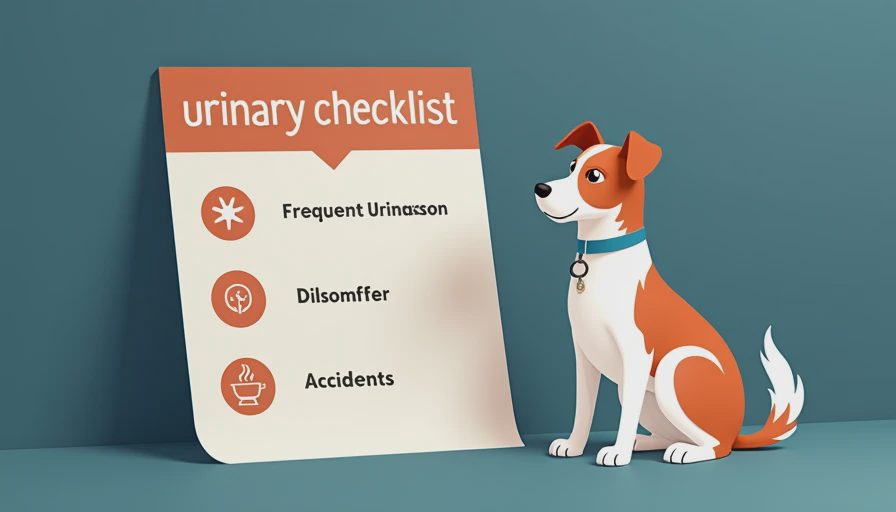
Before calling, gather your dog’s age, sex, breed, weight, current food, medications, and history of urinary problems. Record the last normal urination and the most recent successful one. Describe whether your dog is straining, producing drops, having accidents, licking, or showing pain. Mention blood, odor changes, increased thirst, vomiting, or low energy.
Then ask three practical questions: Does my dog need to be seen today? Should I bring a urine sample? Should food or water intake change before the appointment? These answers depend on the examination and test results, not on the loudest claim on a supplement label.
Dog UTI symptoms are worth taking seriously, but they are not a diagnosis. You can reduce confusion by observing carefully, avoiding improvised treatment, and getting the urine evaluated. Once your veterinarian identifies the cause, follow the treatment directions exactly and report any worsening or return of signs.
Today’s useful action is simple: flip the water bowl over, clean it, refresh it, and write down your dog’s next three bathroom trips. That small record gives your veterinary team better information and helps you notice whether the problem is progressing.


No notes yet — write the first one.