You are standing in the pet food aisle with one hand on a bag labeled “natural” and the other on a can promising “healthy digestion.” Your dog needs dinner, your cat is watching from the cart, and every label seems to make a different argument. These family pet nutrition tips are designed to replace aisle anxiety with a repeatable way to choose food. I am not here to declare one perfect diet. I am here to help you flip the bag, read the panel, and make a sound decision for the animal in front of you.
Start with the nutritional basics
The first question is not whether a food contains blueberries, peas, or a particular type of meat. It is whether the food is complete and balanced for your pet’s life stage. Look for a nutritional adequacy statement from the Association of American Feed Control Officials, commonly called AAFCO. This statement tells you whether the food is formulated for growth, maintenance, reproduction, or all life stages.
A puppy, kitten, adult dog, and senior cat do not necessarily need completely different ingredients, but they do have different nutritional targets. Growing animals need carefully controlled amounts of energy, protein, calcium, phosphorus, and other nutrients. A large-breed puppy has an additional reason to avoid excessive calories and mineral imbalance: rapid growth can place stress on developing bones. Family pet nutrition tips should always begin with life stage, body condition, and medical history rather than a trendy ingredient.
“Complete and balanced” is useful, but it is not a guarantee that every food suits every animal. A food can meet a general standard while still being too calorie-dense for an indoor cat or unsuitable for a dog with pancreatitis. Your veterinarian can help connect the label to your pet’s health needs.
How to read the ingredient panel without panic
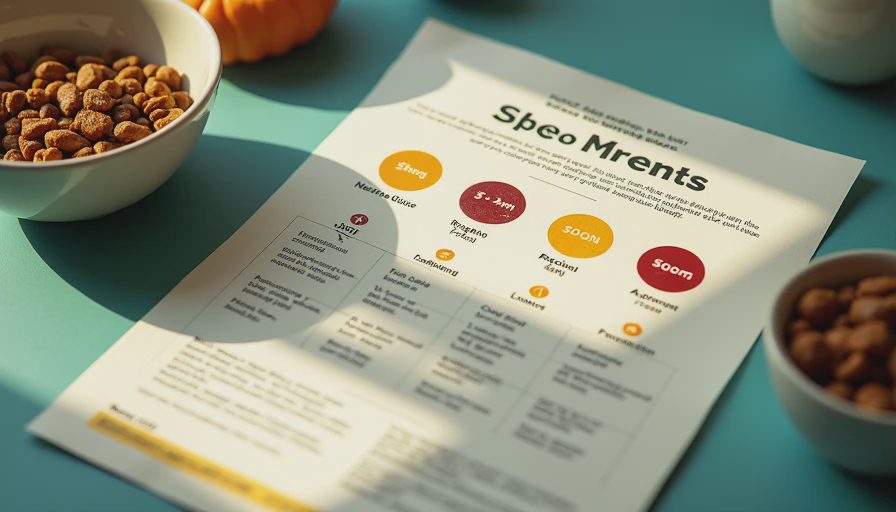
Here is what the panel says — and what it does not. Ingredients are listed by weight before processing, so ingredients with more water, such as fresh chicken, can appear higher than concentrated ingredients. “Chicken meal” is not ground-up waste; it is a rendered, concentrated source of chicken protein and minerals. “By-products” are organ tissues and other edible parts that many pets digest well. A familiar ingredient name is not automatically more nutritious.
Family pet nutrition tips are more useful when they focus on the whole formula instead of one ingredient. Dogs and cats need nutrients, not marketing stories. A food with chicken, rice, and beet pulp can be appropriate, while a food with a more glamorous ingredient list can still be poorly matched to an individual pet. Compare the guaranteed analysis, calorie information, feeding directions, and adequacy statement before making a judgment.
Calories deserve special attention. Two foods can look similar in a bowl but provide very different energy per cup. If your dog gains weight on the recommended amount, measure the food and check calories per cup rather than simply cutting portions by guesswork. For canned food, compare calories per can or ounce. A kitchen scale often gives a more reliable serving than a scoop, especially for a small dog or cat.
Treats, toppers, and the family table
Treats are not morally bad; they are part of living with pets. The problem is that small extras accumulate. A piece of cheese from one child, a dental chew from another, and a spoonful of leftovers at dinner can add a meaningful number of calories by bedtime. One of the simplest family pet nutrition tips is to create a daily treat allowance and put it in a small container each morning. When it is empty, treat time is finished.
For many healthy pets, treats and other extras should stay near 10 percent of daily calories, with the main complete food providing the rest. Use tiny pieces. A pea-sized reward can be plenty for a Labrador learning a new cue, and a cat may prefer several pieces of its regular kibble during play. Avoid foods that are toxic or dangerous, including chocolate, grapes and raisins, onions, garlic, xylitol, alcohol, and cooked bones.
Children can participate safely by measuring approved treats rather than feeding from the table. This turns nutrition into a household routine instead of a negotiation. If a pet has diabetes, kidney disease, food allergies, or a history of pancreatitis, ask your veterinarian before adding treats or toppers.

Raw, homemade, grain-free, and commercial diets
There is no prize for choosing the most complicated feeding method. Commercial dry, canned, and fresh foods can all fit a good plan when the product is complete and balanced and your pet maintains a healthy body condition. Raw diets carry risks from infectious organisms and can create nutritional gaps, particularly when recipes are assembled without professional formulation. Freezing does not eliminate every concern, and people in the household can be exposed even when the pet appears healthy.
Homemade diets can work, but a recipe from a blog, social media post, or generic cookbook is not the same as a complete formulation. Meat and rice alone do not provide the right balance of calcium, essential fatty acids, vitamins, and trace minerals. If you want to cook for your pet, work with a board-certified veterinary nutritionist and follow the recipe precisely. Substituting ingredients casually can change the nutrient profile.
Grain-free is not automatically healthier, and grains are not inherently fillers. Some pets need a specific ingredient change for a diagnosed allergy, but food allergies are less common than many online discussions suggest. A careful elimination diet supervised by a veterinarian is more informative than rotating through expensive bags based on social media claims.
Build a feeding routine that works
Good family pet nutrition tips have to survive busy mornings, school schedules, travel, and a pet who suddenly refuses breakfast. Measure each meal before serving it. Keep the food in its original bag, sealed inside an airtight container if desired, so you retain the lot number and expiration information. Wash bowls regularly, provide fresh water, and store food away from heat and humidity.
When changing diets, transition over several days by mixing increasing amounts of the new food with decreasing amounts of the old. A sensitive pet may need a slower transition. Vomiting, repeated diarrhea, refusal to eat, facial swelling, or unusual lethargy deserves veterinary attention rather than another flavor experiment.
Watch body condition, not just the number on the scale. You should be able to feel the ribs under a thin layer of fat, see a waist from above, and notice an abdominal tuck from the side. A cat who is overweight should not be placed on a crash diet; rapid weight loss can be dangerous. Your veterinarian can establish a safe calorie target and monitor progress.
A simple plan for today
These family pet nutrition tips can become a five-minute monthly check. First, write down your pet’s age, weight, activity level, medical conditions, and current food. Next, record calories per cup, can, or serving and estimate extras. Then check the package for the AAFCO adequacy statement and confirm that the food is intended for the correct life stage. Finally, compare your observations with your veterinarian, particularly if weight, stool quality, thirst, appetite, or energy has changed.
Do not let a dramatic front-of-bag claim outweigh the information on the back. A named meat is not a complete nutritional assessment, and a long ingredient list is not proof of quality. The best diet is one your pet eats willingly, digests well, maintains a healthy body condition on, and can receive consistently within your household’s budget.
Your single action today is simple: flip the bag. Read the panel, find the adequacy statement, and check the calories before you buy the next meal.




No notes yet — write the first one.