You are standing in the kitchen with a can of tuna open, a curious cat circling your ankles, and one practical question: can homemade cat treats be both safe and worthwhile? Yes, but the best approach is less about creating gourmet food and more about controlling ingredients, calories, and portions. Treats are extras, not a replacement for a complete and balanced cat food. Think of them like a small bite from a child’s lunchbox: enjoyable, occasional, and not nutritionally responsible for the whole day.
Start with the ingredient panel
The safest homemade cat treats begin with familiar, plain ingredients. Cooked chicken, turkey, lean beef, salmon, or egg can work when prepared without salt, spices, sauces, butter, or oil. A tiny piece of cooked meat is often more appealing to a cat than an elaborate recipe. Cats are obligate carnivores, which means animal-based nutrients are central to their biology, although that does not make every meat preparation appropriate.
Avoid onions, garlic, chives, shallots, grapes, raisins, chocolate, alcohol, caffeine, and products sweetened with xylitol. These ingredients can cause serious illness in pets. Bones are also a poor choice because cooked bones can splinter, while raw bones carry contamination and injury concerns. Fatty skin, pan drippings, and heavily seasoned leftovers can trigger vomiting or diarrhea and add calories quickly.
For homemade cat treats, texture matters as much as flavor. Some cats prefer a soft shred of chicken; others like a crisp baked crumb or a freeze-dried-style bite. Introduce one ingredient at a time, especially if your cat has a history of food intolerance. If itching, vomiting, diarrhea, or a change in appetite follows, stop the new food and contact your veterinarian.
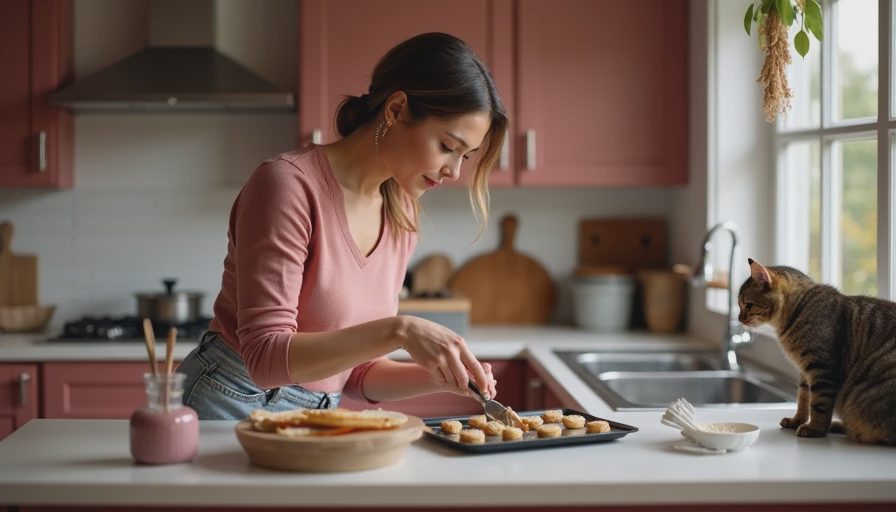
Three practical recipes for homemade cat treats
The first option is a simple chicken nibble. Bake a plain, boneless, skinless chicken breast until fully cooked, cool it, and tear it into pieces no larger than your thumbnail. Store the pieces in the refrigerator for up to three days, or freeze small portions for later. A cat weighing 10 pounds might receive one or two small pieces, depending on the rest of the day’s calories.
The second option uses canned salmon packed in water. Choose a product without added seasoning, drain it well, and mix a teaspoon with a small amount of cooked egg. Form pea-sized pieces and bake them on parchment at a moderate temperature until firm. Let them cool completely before serving. Homemade cat treats made with fish should remain occasional because frequent fish-based snacks can crowd out the cat’s regular diet and create an unbalanced feeding pattern.
For a softer option, mash a little plain cooked egg with shredded turkey. Do not add milk, cream, cheese, garlic powder, or salt. Many adult cats do not digest large amounts of lactose comfortably, and dairy is not necessary for feline nutrition. Keep the mixture crumbly rather than wet, and serve only a small taste at first.
Portion size is the safety feature
A useful rule is that treats should provide no more than about 10 percent of a cat’s daily calories, with the remaining calories coming from a complete and balanced diet. The exact amount depends on body size, age, activity, medical conditions, and the calorie density of the food. A small cat can exceed its treat budget with just a few rich bites.
This is where homemade cat treats can become deceptively generous. A cook may see plain chicken as healthy and stop counting, but calories still count even when the ingredient is wholesome. Cut treats before serving rather than breaking off pieces randomly. For training, use crumbs or reserve part of the cat’s regular kibble as the reward. A kitchen scale is helpful when weight management is a priority.
Watch the body, not just the bowl. You should be able to feel the ribs under a thin layer of fat, and your veterinarian can assess body condition during an exam. If your cat is gaining weight, reduce extras before making a dramatic change to the main diet.

Medical conditions change the recipe
Healthy cats may tolerate a small piece of plain cooked meat, but a cat with kidney disease, diabetes, inflammatory bowel disease, food allergy, or urinary issues needs a more careful plan. For example, a meat-based snack can add phosphorus, protein, sodium, or calories that matter in a therapeutic diet. A cat undergoing a food trial may need to avoid every ingredient outside the prescribed diet, including tiny treats.
Homemade cat treats should not be used to hide medication unless your veterinarian approves the food and confirms that it will not interfere with treatment. Some cats also need medications given on an empty stomach or separated from other products. Ask for a specific treat plan at the next appointment, especially if your cat has lost weight, is drinking more, is vomiting, or has a reduced appetite.
Do not attempt to turn treats into a home-prepared main diet without professional formulation. Complete feline nutrition requires more than meat. Taurine, calcium, essential fatty acids, vitamins, and trace minerals must be supplied in correct amounts and ratios. A recipe that looks balanced to a person can be deficient for a cat over time.
Storage, hygiene, and the store-bought comparison
Treat preparation deserves the same basic food-safety habits as family cooking. Wash hands and utensils, cook meat thoroughly, refrigerate promptly, and discard food that has been left out for several hours. Mark containers with the preparation date. If a treat smells sour, looks slimy, or has developed mold, throw it away rather than testing it on your cat.
The appeal of homemade cat treats is control: you know whether the food contains seasoning, how large each piece is, and what your cat is eating. Commercial treats offer convenience, consistent calorie information, and often a longer shelf life. A reputable product with a short ingredient list can be a sensible choice, particularly for a busy household. Flip the bag. Read the panel, then compare the calorie statement and feeding guidance instead of judging a treat by words such as natural or premium.
Whether you bake a batch or open a small pouch, keep the reward small. Treats should support bonding, handling, carrier training, and positive reinforcement without becoming the emotional center of every interaction. Play, brushing, window time, and a quiet lap can also be valuable rewards for cats that are not especially food motivated.
A sensible first batch
For a first experiment, cook one plain protein, cut it into tiny pieces, and offer a single piece after your cat has eaten its normal meal. Observe appetite, stool, and behavior over the next day. If everything is normal, use the food sparingly and record how much you serve. That simple log can prevent accidental overfeeding, especially when several family members share treat duty.
Homemade cat treats are best viewed as a controlled garnish, not a nutritional upgrade by themselves. Choose plain ingredients, avoid toxic seasonings, respect medical diets, and count the calories. Today’s useful action is simple: flip the bag of your current treats, read the calorie and ingredient panel, and measure the next reward before it reaches the bowl. When in doubt about a medical condition or diet change, ask your veterinarian for advice tailored to your cat.





No notes yet — write the first one.