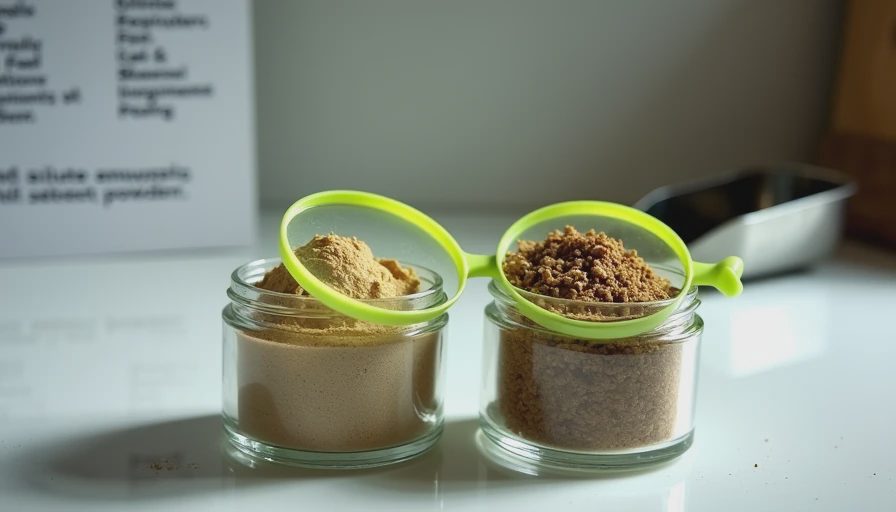
The Two Ingredients That Still Start Arguments
If you spend any time on pet-food forums, you will eventually see the same fight break out: someone declares that “chicken by-product meal” is garbage while “chicken meal” is premium. Someone else replies with equal confidence that both are just rendered leftovers. The comments then descend into citations of half-remembered definitions and photos of unappetizing slaughterhouse scenes.
I have formulated commercial diets using both. I have sat in rooms where the purchasing team negotiated the price of each. I have reviewed the actual nutrient analyses that come back from the rendering plants. So I am going to tell you what the practical difference is, and what it is not.
Spoiler: the gap is smaller than the marketing departments want you to believe, and larger than the “it’s all the same trash” crowd claims.
What the Definitions Actually Say
Let’s start with the official language, because the internet versions are usually wrong.
According to the current AAFCO definitions:
Chicken meal is the dry rendered product from a combination of clean flesh and skin with or without accompanying bone, derived from the parts of whole carcasses of chicken. It must be suitable for use in animal food. It excludes feathers, heads, feet, and entrails except in such amounts as may occur unavoidably in good processing practices.
Chicken by-product meal is the dry rendered product from clean, undecomposed, non-rendered parts of chickens other than meat and bone meal. It includes (but is not limited to) lungs, spleen, kidneys, brain, livers, blood, bone, partially defatted low-temperature fatty tissue, and stomachs and intestines freed of their contents. It must be suitable for animal food. Again, feathers are excluded except for unavoidable amounts.
In plain English: chicken meal is mostly muscle and skin (with some bone). Chicken by-product meal is mostly the internal organs and other clean parts that are not skeletal muscle. Both are rendered—meaning cooked at high temperature under pressure to remove water and fat, then ground into a concentrated meal.
Neither one is “raw chicken” that somehow survived the process. Both start as fresh or frozen material that is then heavily processed.

What Changes When You Render
Rendering is the great equalizer and the great differentiator at the same time.
Water is removed, so the protein percentage on the label jumps. A chicken carcass that starts around 18–20% protein on a wet basis can become a meal that is 65–70% protein. That is why meals appear high on the ingredient list even when the original fresh chicken would have ranked lower by weight.
The amino-acid profile, however, is not identical between the two meals. Muscle tissue is richer in certain amino acids; organ tissues bring different micronutrients (and, in some cases, higher ash if bone content is elevated). In the formulation software I used to live inside, swapping one for the other was never a 1:1 protein exchange. You had to adjust the rest of the formula to keep calcium, phosphorus, and the essential amino acids inside the target ranges.
Quality also varies more than the name suggests. A well-sourced chicken meal from a dedicated pet-food stream can be excellent. A poorly controlled by-product meal can be high in ash and low in digestibility. The reverse is also true. I have seen premium by-product meals with better amino-acid scores than average chicken meals. The name on the label is only the starting point.
The Marketing Story Versus the Lab Sheet
The premium brands love to put “chicken meal” in large letters and treat “by-product meal” as a scarlet letter. The value brands sometimes do the opposite and act as if the distinction is pure snobbery.
Both positions oversimplify.
When I was formulating, the decision to use one or the other was driven by three practical questions:
What is the actual nutrient profile of the specific lot we can buy this month?
What is the digestibility and ash content?
What is the cost relative to the rest of the formula?
I never once chose an ingredient because the marketing team thought the name sounded nicer. I chose it because the lab sheet and the price made the overall diet work. If a by-product meal gave me better calcium-to-phosphorus balance and higher digestibility at a lower cost, it went in. If a chicken meal did the same job better, it went in instead.
Owners rarely see those lab sheets. They only see the ingredient list and the emotional loading that has been attached to the words.
What Actually Matters When You Read the Panel
If you are standing in the aisle trying to decide between two bags, here is the more useful hierarchy:
Look at the full guaranteed analysis and, if available, a typical nutrient analysis. Protein percentage alone tells you almost nothing about amino-acid quality.
Check the calcium and phosphorus numbers. High-ash meals (whether labeled “meal” or “by-product meal”) can push those minerals out of the ideal range, especially for large-breed puppies or dogs with certain medical conditions.
Ignore the moral panic around the word “by-product.” Organs are nutrient-dense. A chicken liver is not garbage; it is one of the most nutrient-rich parts of the bird.
Pay attention to the company behind the bag. Consistent quality control, lot testing, and transparent sourcing matter more than which of the two chicken ingredients appears first.
I have formulated excellent diets with chicken by-product meal as a primary animal protein. I have also rejected chicken meal lots that came back with ash levels I would not put in a puppy food. The name was never the deciding factor. The numbers were.
A Short Personal Note From the Lab Bench
The first time I watched a rendering truck unload, I understood why the optics are bad. The material does not look like the chicken breast you buy at the grocery store. It looks like what it is: the parts of the bird that humans in our culture prefer not to eat. That visual is powerful, and marketing departments on both sides have weaponized it.
But nutrition is not a visual medium. It is a numbers-and-outcomes medium. Once the material is rendered, ground, and incorporated into a complete diet that meets the animal’s requirements and is highly digestible, the original appearance becomes irrelevant to the dog.
Dogs do not read ingredient lists. They eat the finished kibble or the finished wet food. Their bodies respond to the amino acids, the fatty acids, the minerals, and the overall digestibility—not to the emotional valence of the words we printed on the bag.
Practical Takeaway for the Next Time You Flip the Bag
When you see “chicken meal” or “chicken by-product meal,” treat both as concentrated animal proteins that have been rendered. Then ask the better questions:
Does the rest of the guaranteed analysis look balanced?
Is there any information about ash content or digestibility?
Does the company publish more detailed nutrient data?
Has this diet been fed successfully to dogs with needs similar to yours?
If the only argument you are given is “by-product meal is disgusting,” you are being sold a feeling, not a formulation. If the only argument is “chicken meal is always superior,” you are also being sold a feeling.
The panel is still the most useful information on the bag. Read it. Then decide with the actual differences in mind, not the ones invented for the internet.
That is the difference I learned while formulating with both.




No notes yet — write the first one.