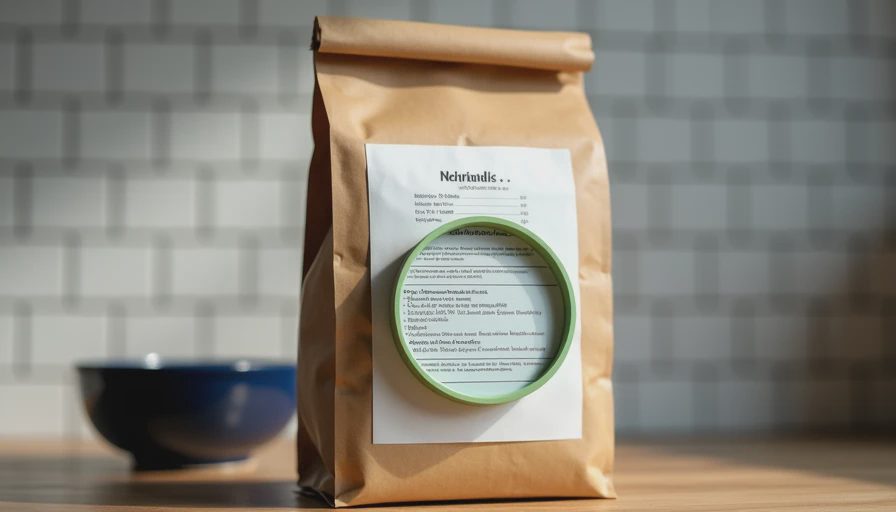
Why I’m Standing in the Aisle With You
I still remember the first time I watched a client’s face fall in the pet-food aisle. She was holding two bags—one with a golden retriever on the front looking like it had just won Best in Show, the other with a serious scientific claim about “ancestral nutrition.” Both bags cost roughly the same. Both claimed to be “complete and balanced.” She looked at me the way people look at the person who just told them the Wi-Fi password is actually 47 characters long.
“Which one is better?” she asked.
I did what any decent nutritionist does when the marketing department has done its job too well: I flipped both bags over.
That moment is why this blog exists.
I’m Matthew Kemper. I’m a board-certified veterinary nutritionist—one of fewer than a hundred DACVNs in the United States. I spent seven years in the R&D lab of a major pet-food company formulating the exact kinds of recipes that now sit on those shelves. Then I left, because I got tired of watching smart, caring owners get gaslit by packaging. I wanted to stand on the other side of the bag with them.
So here we are. No brand deals. No “just trust me, I’m a vet” hand-waving. Just the panel, the science, and what it actually means when you’re standing there with sixty bucks and a dog who is currently trying to eat the price tag.
The Problem Isn’t That You Don’t Care
You care. That’s obvious. The problem is that the information ecosystem around pet food has become a full-contact sport. Raw versus commercial. Grain-free versus grain-inclusive. “Human-grade” versus “feed-grade.” Every TikTok creator, every Facebook group, every well-meaning relative has a strong opinion and a study they half-remembered from three years ago.
Meanwhile the actual label—the only piece of regulated information on the entire package—sits on the back, in small print, using language that was designed by committees and lawyers rather than by people who talk to dogs.
I’ve read more of those panels than most people have read tweets. I’ve formulated with chicken meal and with chicken by-product meal. I’ve watched AAFCO feeding trials succeed and fail. I’ve seen the same ingredient list produce wildly different nutrient profiles depending on processing. And I’ve watched owners feel stupid for not already knowing all of this.
You’re not stupid. The system is just deliberately opaque.
What “Read the Panel” Actually Means

When I say “Flip the bag. Read the panel,” I’m not asking you to memorize every amino-acid requirement. I’m asking you to stop treating the front of the bag as the product and the back as the fine print.
The panel is where the company is legally required to tell you, in a standardized format, what is actually in the food and whether it meets minimum nutritional standards. It’s not perfect. It has gaps. It can be gamed. But it is still the single most useful piece of information on the entire package—if you know how to read it.
Over the coming weeks and months I’m going to walk through that panel piece by piece. We’ll talk about why the first five ingredients are a lie you’ve been taught to believe. We’ll look at what “chicken meal” actually is versus “chicken by-product meal.” We’ll unpack the AAFCO statement that almost nobody reads and almost everybody should. We’ll talk about preservatives, about “human-grade” claims, about the difference between a marketing claim and a nutritional fact.
And every time, the goal will be the same: give you one concrete thing you can do the next time you’re standing in that aisle.
A Quick Note About What This Blog Will Never Do
I will not tell you there is one correct diet for every dog. There isn’t.
I will not sell you a supplement stack. Most of them don’t have the evidence.
I will not practice medicine through a blog. Every post will end with the same reminder: talk to your own veterinarian about your individual animal.
I will not shame you for the food you bought last month because it was on sale and your dog liked it. Budget is real. Palatability is real. Life is complicated.
What I will do is show you the evidence, admit when the evidence is thin, and translate the jargon into something you can actually use while holding a leash in one hand and a bag in the other.
How We’ll Work Together
I’m writing this from Fort Collins, Colorado, where my two dogs—Roux, a senior Lab who is slowing down, and Clover, a three-legged cattle-dog mix with opinions—serve as unofficial quality-control officers. My kids occasionally develop treat recipes that I then have to quietly veto for nutritional reasons. My wife teaches biology and has a lower tolerance for nutritional mythology than I do, which is saying something.
The posts will come in a few flavors. Some will be deep dives on single ingredients or label claims. Some will put popular diet philosophies on trial against the actual literature. Some will be practical decision trees for the store. Some will be case-style discussions of common medical nutrition problems. And every once in a while I’ll write about the kitchen experiments and the trail walks, because it turns out living with dogs and a nutrition degree produces a certain amount of material.
But the through-line never changes: flip the bag. Read the panel. Ask better questions.
If you’ve ever stood in the aisle feeling like you needed a PhD just to buy dog food, you’re exactly who this is for. You don’t need a PhD. You need a clear explanation and a habit of turning the package around.
Let’s start there.
Flip the bag.
Read the panel.
We’ll go from there.





No notes yet — write the first one.