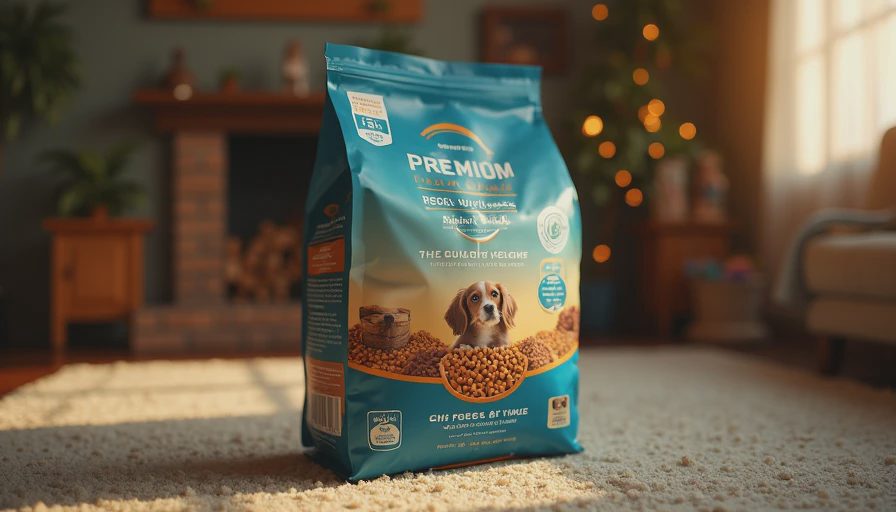
You are standing in the pet food aisle, holding two bags that both promise complete nutrition, shiny coats, and lifelong vitality. One costs nearly twice as much. Is premium dog food actually better, or are you paying for attractive packaging? The useful answer starts with the back of the bag, not the photograph of roasted meat on the front.
I have spent years reading ingredient panels and comparing formulations, and my advice is refreshingly unglamorous: judge the diet by nutritional adequacy, quality control, calories, and your individual dog's response. Price and marketing can provide clues, but they do not prove that premium dog food is the right choice.
What “premium” means on a dog food label
“Premium” is generally a marketing term, not a regulated nutritional category. In the United States, companies can use it to describe products with attractive ingredients, specialized processing, higher prices, or a particular brand identity. There is no single legal checklist that every premium dog food must satisfy.
Start instead with the nutritional adequacy statement. Look for wording showing that the food is complete and balanced for your dog's life stage, such as adult maintenance, growth, or all life stages. A food labeled only for intermittent or supplemental feeding is not designed to be the main diet. Puppies, pregnant dogs, seniors with medical conditions, and highly active working dogs may need different nutrient profiles.
Next, find the manufacturer’s contact information and feeding directions. A serious company should be able to explain who formulates the diet, how it is tested, and where it is produced. The World Small Animal Veterinary Association encourages owners to ask about nutrition expertise, quality control, ingredient sourcing, and finished-product testing. Those answers tell you more than the word premium printed across the front.

Ingredients matter, but the list is not a report card
The ingredient list is useful, but it has limits. Ingredients appear by weight before cooking, so moisture-heavy chicken or fish can appear above concentrated meals. Chicken meal, for example, is not the same as a bowl of cooked chicken; it is a rendered, concentrated source of animal protein. By-products are also not automatically waste. Organ tissues can provide valuable nutrients, while “by-product” tells you little about quality by itself.
Premium dog food often highlights named meats, vegetables, probiotics, or novel grains. Those details can be meaningful, especially when a dog has a diagnosed allergy or digestive concern, but a long ingredient list is not automatically more nutritious. Dogs do not need a menu that resembles a human restaurant dish. They need appropriate amounts of essential amino acids, fatty acids, vitamins, and minerals.
Watch for ingredient-splitting strategies, where similar plant ingredients are listed separately so an animal ingredient appears higher on the panel. This does not automatically make a product unsafe, but it is a reminder to read the complete formula rather than treating the first three ingredients as a final judgment.
How to compare two foods fairly
Suppose one bag costs $70 and contains 25 pounds, while another costs $45 for the same weight. The cheaper food is not necessarily less nourishing, and the expensive one is not necessarily better. Compare calories per cup and feeding amounts first. A more calorie-dense food can require smaller portions, narrowing the apparent price gap.
Then compare guaranteed analysis values, remembering that percentages are reported on an “as-fed” basis unless you convert them to dry matter. Protein listed at 26 percent in a dry food cannot be compared directly with protein listed at 10 percent in a canned food because water changes the math. For an exact comparison, use the calorie content and ask the manufacturer for typical nutrient analysis when needed.
Look for differences that have practical value. A prescription diet for a diagnosed condition is different from a boutique food with a fashionable ingredient. A diet with a carefully controlled calorie density may help an overweight dog more than one with an expensive supplement blend. If your dog has chronic vomiting, itching, urinary problems, or kidney disease, involve your veterinarian before changing foods.
Grain-free, fresh, and raw claims need context
Many premium dog food products emphasize grain-free recipes, fresh meat, freeze-drying, or raw ingredients. None of those features automatically guarantees better health. Grains such as rice, barley, and oats provide carbohydrates, fiber, and other nutrients; most dogs do not need to avoid them unless there is a specific medical reason. True food allergies are less common than owners often assume, and diagnosis usually requires a carefully managed elimination diet.
Raw diets also deserve caution. Freezing does not eliminate every pathogen, and home-prepared raw or cooked diets can become nutritionally unbalanced without formulation by a veterinary nutrition professional. Fresh food can be a reasonable option when it is complete and balanced, handled safely, and appropriate for the household. The preparation style is less important than the finished nutritional profile.
When a label says “natural,” “holistic,” or “human-grade,” ask what that claim actually means. Some terms have defined regulatory uses, while others mainly create an impression. Here’s what the panel says—and what it doesn’t: it can show ingredients, calories, feeding guidance, and adequacy claims, but it cannot tell you whether your particular dog enjoys the food or maintains a healthy body condition on it.
A practical buying plan for premium dog food
Before shopping, write down your dog’s age, current weight, activity level, medical diagnoses, treats, and recent stool quality. Take a photo of the current label. At the store, confirm the life-stage adequacy statement, calorie content, feeding directions, lot information, and customer-service contact. If the company cannot answer basic formulation or quality-control questions, choose a more transparent manufacturer.
Make changes gradually over about a week when possible. Start with mostly the old food and a smaller portion of the new food, then increase the new diet while watching appetite, stool consistency, vomiting, itching, and body weight. A sudden switch can cause digestive upset even when both foods are nutritionally sound.
Do not let the bag determine the portion. Feeding charts are starting points, not prescriptions. Measure meals with a standard cup or kitchen scale, count treats, and check your dog’s body condition regularly. If ribs are difficult to feel or weight is climbing, reduce calories with veterinary guidance rather than chasing a more expensive label.
Is premium dog food worth the cost?
Sometimes. A carefully formulated diet from a transparent manufacturer can be a sensible investment, particularly when it solves a real problem: reliable calorie control, a veterinary therapeutic need, or improved acceptance for a picky dog. But spending $90 on a bag does not make an ordinary diet inadequate, and spending less does not mean you are neglecting your pet.
The best food is one your dog eats willingly, digests well, maintains a healthy weight on, and can receive consistently. Your veterinarian can help interpret changes in weight, stool, skin, or energy, especially if your dog has an illness. Nutrition is not a contest between internet factions; it is a daily experiment with measurable outcomes.
Today’s action is simple: flip the bag. Read the panel, find the complete-and-balanced statement, check calories, and write down the manufacturer’s answers to your questions. That five-minute habit will tell you far more about premium dog food than the front-of-bag promises.


No notes yet — write the first one.